Your current TV sucks. We get it. You’re staring at a screen that looks washed out, too dim for a Sunday night movie, or just plain dated. Upgrading isn’t like swapping out a Ninja blender. It’s complex. Go to a store? Fine. But is standing in a showroom with fifteen identical loops playing in your face actually helpful, or just a sensory overload?
If you’re drowning in specs and acronyms, this 2026 guide is for you.
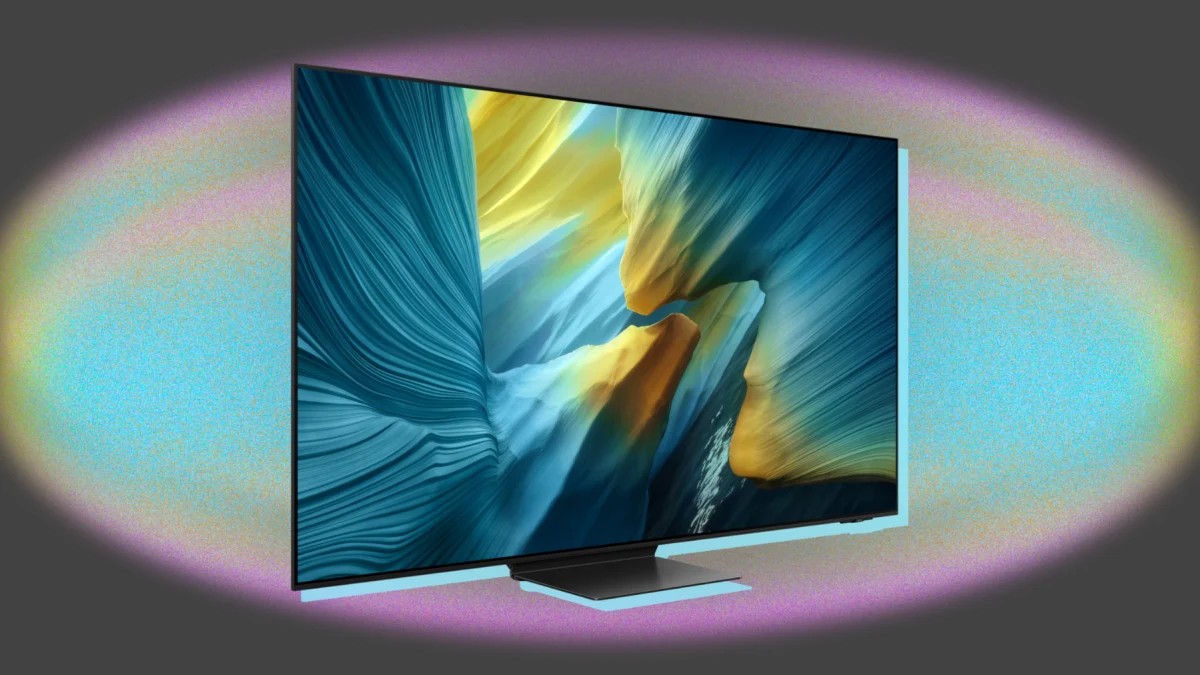
We’ve settled on 65-inch TVs as the pragmatic sweet spot for most households. It’s large enough to immerse you but fits on standard stands without blocking your hallway. Whether you’re chasing the perfect QLED, need a gaming beast, or just want a wall-mounted art piece, here is the real breakdown.
Sony and TCL Merge: What Changes for Bravia Buyers?
First, a market shakeup. Sony has long been the premium choice. TCL? Budget king. Now they’re partners.
As of January 2026, TLC took over Sony’s home entertainment division. TVs are still Bravia branded. Picture processing? Sony. Manufacturing and pricing? TCL.
Why does this matter? Sony TVs used to be prohibitively expensive for the average shopper. With TCL’s manufacturing muscle, expect tighter prices without sacrificing the Bravia name. If you’re looking for that premium Sony feel without the 2023 price tag, wait for the 2027 lineup. But for now, let’s look at what you can buy today.
Best QLED TV: TCL 65-Inch QM8L Mini LED
For: Bright rooms, daytime sports, and value seekers
If you watch TV during the day, especially sports, you need brightness. The TCL QM8L delivers.
It tops out at 6,000 nits. That’s sublime. For context, it’s twice as bright as the base-tier QM7L. The 65-inch model regularly drops to $1,499.99 —a $1,000 cut from launch. That’s cheap for this performance class.
The Tech: It uses “Super Quantum Dots.” These nanocrystals are 5nm (vs. 60nm for standard). Smaller crystals mean narrower spectral response. In plain English? The colors are precise. No blooming. No halos.
The Catch:
– It lacks a 98-inch option.
– No sizes smaller than 65.
– Only two HDMI 2.1 ports.
– Good for gaming, but not OLED-level good.
Still, if you want the best QLED for most people, this is it. It handles glare like a champ and blacks are surprisingly deep for a QLED.
Specs:
* Platform: Google TV
* Refresh Rate: Up to 144Hz
* Inputs: 4 HDMI
Best OLED TV: LG 65-Inch C6 4K
For: Dark room movie buffs and casual gamers
OLED is king in the dark. LG’s C series is the darling of tech reviewers, and the 2026 LG 65-inch C6 keeps that crown.
It’s frequently on sale for $1,999.99. Compare that to the Samsung S95H, which costs over $3,000 on sale. The C6 is premium without breaking the bank.
Why it wins:
– Infinite contrast ratio. Blacks are actually black.
– Virtually nonexistent blooming.
– Wider viewing angles than Samsung’s QD-OLEDs.
– Brighter and more gaming-focused than its predecessor, the C5.
The Catch:
– The 65-inch model missed out on the “Hyper Radiant Color Tech” upgrade. That’s reserved for the 77-inch C6H and 83-inch C6H. Those models are three times brighter.
– Still not the best choice if your living room has floor-to-ceiling windows.
If you have a C5, don’t upgrade to the C6 unless you can’t live without that extra 21Hz boost (165Hz total). If you’re coming from a non-OLED, you’ll notice the difference immediately.
Specs:
* Platform: webOS
* Refresh Rate: Up to 165Hz
* Inputs: 4 HDMI
Best Art TV: Samsung 65-Inch The Frame (2025 Model)
For: Design-conscious viewers who treat TV as furniture
The Frame is niche. It’s a digital picture frame first. A TV second.
Samsung perfected this form factor. The 2025 model measures just 1 to 1.2 inches thin. It lies flat against the wall. The anti-glare matte coating works miracles in bright rooms.
The Value Play:
Yes, the 2026 Frame (LS03HE) has better color accuracy and a faster processor. But it costs $800 more than the 2025 model. Is it worth it? No. The tweaks aren’t major. The 2025 version offers the best bang for your buck, often dipping below $1,000.
The Compromise:
It lacks full-array local dimming. Contrast is duller compared to OLEDs or high-end Mini LEDs. If you’re a cinephile who watches a lot of dark movies, look elsewhere. If you want to hang framed art on your wall when not watching The Price Is Right, this is your TV.
Note: Samsung Art Store costs $5/month for non-subscribers. Basic access is free but limited.
Specs:
* Platform: Tizen TV
* Refresh Rate: Up to 144Hz
* Inputs: 5 HDMI
* Sizes: 43 to 85 inches
Best RGB TV: Hisense 65-Inch UR9 4K
For: PC gamers, HDR enthusiasts, and color purists
2026 saw a boom in RGB TVs. Samsung, Sony, and Hisense all jumped in. Hisense’s UR9 stands out.
What is RGB backlighting?
Standard LEDs reflect blue/white light through filters. RGB TVs use tiny red, green, and blue light sources directly. The result? 100% color gamut coverage. Pure, saturated hues. Extreme precision.
The Hisense UR9 brings this to a 65-inch screen without the OLED price tag.
Why it’s special:
– Brightness: Hits up to 5,000 nats. Handles bright rooms better than OLED.
– Black Levels: Deep blacks thanks to local dimming. Close to OLED territory.
– Gaming: Rare DisplayPort Alt Mode. Pushes 180Hz at 4k (or 330Hz at 1080p/1440p). Essential for high-end PC gamers.
– Design: Ultra-slim 1.8-inch profile.
The Catch:
– Viewing angles are narrower than OLEDs. If you sit on the edge of the couch, colors wash out.
– Reflects some glare in direct sunlight.
For mixed usage—bright days and dark nights—and hardcore PC gaming, the UR9 is hard to beat.
Specs:
* Platform: Google TV
* Refresh Rate: Up to 180Hz
* Inputs: 3 HDMI + 1 DisplayPort
* Sizes: 65 to 100 inches
Best Budget Mini LED: TCL 65-Inch QM6K
For: First-time upgraders, sports fans, and budget shoppers
You don’t need to spend $2,000 to get a great picture. The TCL QM6K proves that.
Often priced around $649.99, it sits perfectly between cheap edge-lit LEDs and premium Mini LEDs. It’s brighter and sharper than standard LED. It’s significantly better for daytime sports than entry-level models.
The Experience:
I upgraded my living room TV to this model. My room gets slammed with natural light. Old TVs looked sepia. The QM6K brings the grass green again. Football fields look like grass, not old photographs.
Tech Highlights:
– Precise Dimming: 500 dimming zones. Adjusts every second.
– Dark Room Performance: Surprisingly capable for the price. Shadows hold detail.
– Gaming: Low input lag. HDMI 2.1 support.
The Limitation:
– Reflections can be an issue in sunny rooms.
– HDR specs are “mediocre” if you’re a strict spec-sheet reader.
If you want fluid motion, good black levels, and don’t want to break the bank, the QM6K is the entry point you need. It’s thick for a Mini LED (2+ inches), but that’s the trade-off for the price.
Specs:
* Platform: Google TV (implied via TCL ecosystem)
* Refresh Rate: Not specified (typically 120Hz)
* Inputs: Standard (HDMI 2.1 included)
* Sizes: 55 to 98 inches
How to Decide
You have options. Which one fits your life?
- Watch sports in a bright living room? Get the TCL QM8L. The brightness and anti-glare coating will save you.
- Binge movies in a dark theater? The LG C6 OLED is unmatched for contrast and blacks.
- Care more about decor than pixels? The Samsung The Frame (2025) is the slickest design at the best price.
- Game on a high-end PC? The Hisense UR9 gives you that essential DisplayPort and 180Hz support.
- Just want a better picture without the debt? The TCL QM6K punches way above its weight class.
TV tech moves fast. Prices drop faster. Don’t overthink the spec sheet. Look at your room. Look at your usage. Pick the screen that disappears when you’re watching.