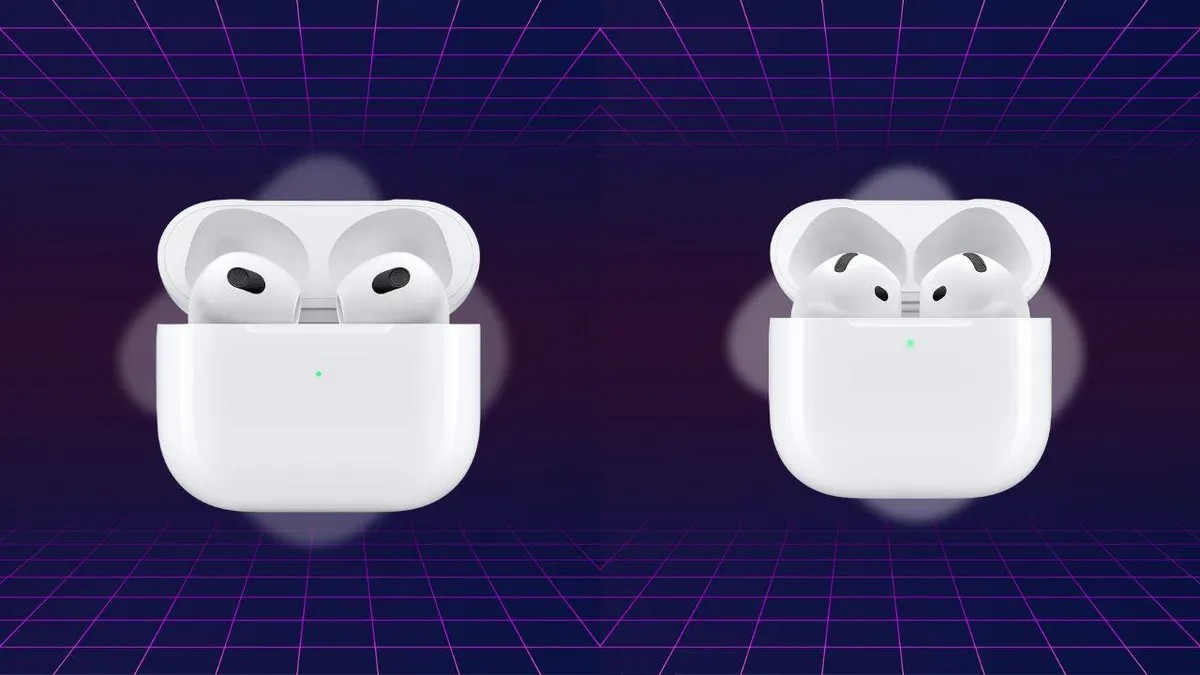
Apple’s newest AirPods offer significant improvements over their predecessors, but the decision to upgrade depends on your needs. The fourth generation builds upon the foundation laid by the AirPods 3, introducing enhanced features and performance at a competitive price point. Let’s break down the key differences and help you decide if it’s time to ditch your AirPods 3 for the latest model.
Design and Durability
The AirPods 4 maintain a similar design to the AirPods 3, but with subtle refinements. Both models weigh approximately the same (4.3 grams per earbud), ensuring comfort isn’t sacrificed for upgrades. However, the AirPods 4 boast an improved IP54 rating for dust and sweat resistance, making them more durable than the AirPods 3’s IPX4 rating. This upgrade provides peace of mind for active users who expose their earbuds to more than just light moisture.
Audio Quality and Chipset
The most noticeable enhancement lies in the chipset. The AirPods 4 feature the H2 chip with Bluetooth 5.3, a step up from the AirPods 3’s H1 chip with Bluetooth 5.0. This translates to cleaner audio with improved treble and bass response. While not reaching AirPods Pro levels, the sound quality gap between non-Pro and Pro models has narrowed considerably.
For users who prioritize noise isolation, the $179 AirPods 4 with Active Noise Cancellation (ANC) offer a compelling upgrade. While not on par with the AirPods Pro 2 or 3, the ANC performance is surprisingly effective for an open-ear design, providing a noticeable reduction in ambient noise.
New Features and Controls
Apple has packed several new features into the AirPods 4 lineup. The $179 model adds Qi wireless charging compatibility (including Apple Watch pucks) and a built-in speaker for Find My tracking. The inclusion of Adaptive Audio and Conversation Awareness further enhances usability. Conversation Awareness automatically pauses music when you start speaking, seamlessly transitioning to transparency mode—a feature similar to Sony’s Speak-to-Chat.
The AirPods 4 also introduce Siri Interactions, allowing users to control playback and answer calls with head nods or shakes. The charging case ditches the physical button in favor of double-tap pairing for non-Apple devices.
Battery Life and Value
Battery life sees a minor decrease in the AirPods 4, offering up to five hours of continuous listening compared to the AirPods 3’s six hours. However, the case still provides 30 hours of additional charge. Given the feature upgrades, the slightly reduced battery life is a reasonable trade-off.
The AirPods 4 launch at $129 for the standard model and $179 for the ANC version, making them more affordable than the AirPods 3 were at launch. This aggressive pricing makes upgrading an even more attractive option.
Should You Upgrade?
If you own AirPods 3 and value better sound quality, improved durability, and new features like ANC and Conversation Awareness, the AirPods 4 are a worthwhile upgrade. The $179 version with ANC offers the best value, providing noise cancellation and additional convenience features for the same price the AirPods 3 launched at. Even if you don’t need ANC, the standard AirPods 4 provide a noticeable improvement over their predecessors at a lower price point.
Ultimately, the decision comes down to your budget and priorities. But for most AirPods 3 users, the AirPods 4 represent a compelling upgrade that delivers tangible benefits without breaking the bank.