


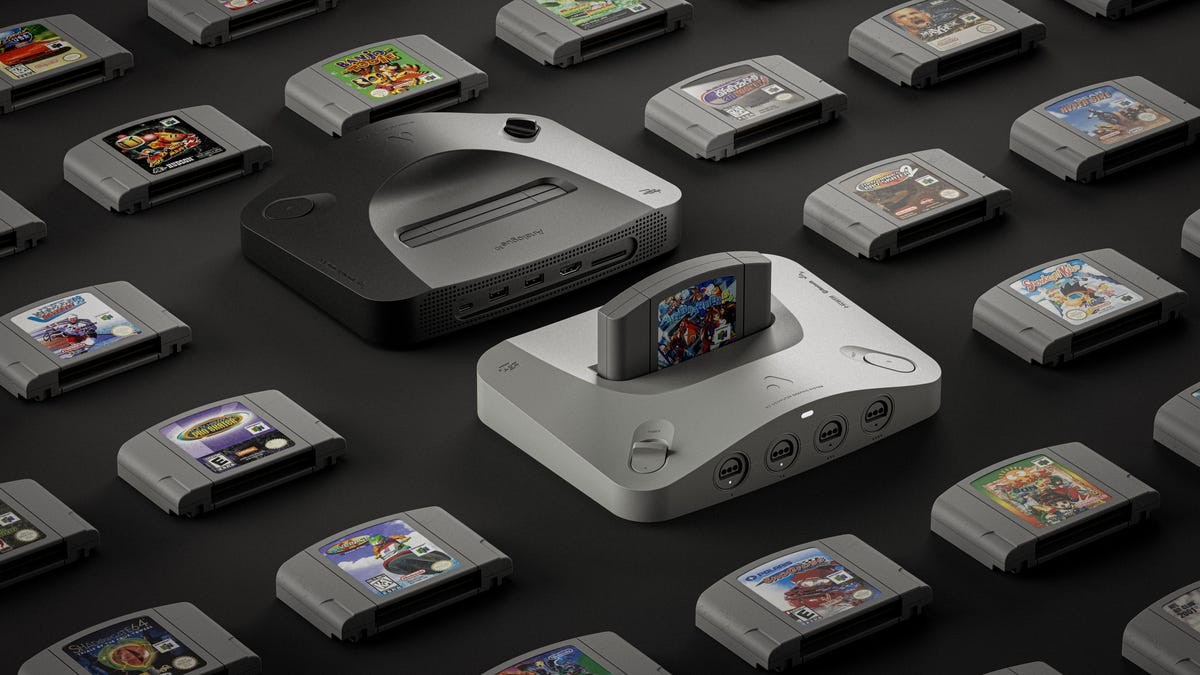
The Nintendo 64, a console defined by its leap into 3D gaming, holds a unique place in the hearts of Millennial gamers. For many, it wasn’t just about Super Mario 64 or Ocarina of Time ; it was about a pivotal moment in gaming history. Now, Analogue is offering a way to revisit that era with uncompromising fidelity: the Analogue 3D. This isn’t just another retro console; it’s a meticulously engineered recreation aimed at delivering the purest N64 experience possible on a 4K television.
The Problem with Nostalgia
The original N64 sold roughly 33 million units worldwide, far fewer than its predecessors (61 million NES, 101 million Wii) or successors (154 million Switch). Finding a working console today means relying on garage sales, unreliable emulators, or the limited selection on Nintendo Switch Online. Each method has its flaws: availability, compatibility issues with modern TVs, and a lack of the authentic feel. The Analogue 3D seeks to solve this by bridging the gap between classic hardware and contemporary displays.
How the Analogue 3D Works
Unlike the flood of cheap emulation handhelds, the Analogue 3D uses Field Programmable Gate Array (FPGA) technology. This means it recreates the original N64 hardware at a transistor level, ensuring games run exactly as intended. There’s no software trickery, no compromises. The console accepts original N64 cartridges and outputs a native HDMI signal with internal scaling. At $250, including a wireless controller, it’s competitively priced compared to the $210 soldering-required HDMI mod kits that attempt similar results.
Fidelity vs. Enhancement
The Analogue 3D’s commitment to purity comes at a cost. While software emulators like Project64 can upscale textures and improve resolution, the 3D displays games in their original blocky glory. However, it offers a suite of filters that simulate the look of classic CRT televisions, softening the image and preserving the intended aesthetic. This caters to purists who prefer the authentic feel over artificial enhancements.
The audio experience is equally uncompromising. The Analogue 3D delivers richer, fuller sound with surround support, far surpassing the quality of Nintendo Switch Online’s emulation. According to Analogue, this is achieved through high-quality hi-fi components, resulting in a noticeable difference in tonal clarity and bass response.
Input Latency and Overclocking
One of the biggest improvements over emulation is input latency. The Analogue 3D virtually eliminates lag, ensuring responsive gameplay in titles like Mario Kart 64 or Super Smash Bros. However, it does require a clear line of sight with the connected controller to avoid performance issues.
For demanding titles like Perfect Dark or Conker’s Bad Fur Day, the Analogue 3D includes overclocking options to improve performance. This mirrors Nintendo’s own use of more powerful development kits late in the N64 lifecycle.
Flash Carts and Future Compatibility
Currently, the Analogue 3D does not support flash cartridges like the Everdrive 64 X7, which allow users to play entire libraries from an SD card. While Analogue has not ruled out future compatibility, it requires vendor cooperation.
The Verdict
The Analogue 3D isn’t for everyone. Emulation offers convenience and enhancements that some gamers will prefer. But for those seeking the most authentic N64 experience possible, the Analogue 3D delivers. It’s a premium product for purists who value fidelity above all else, offering a way to recapture the magic of a console that shaped a generation. If you missed out on the N64 or want to experience it as it was meant to be played, the Analogue 3D is the definitive solution.


