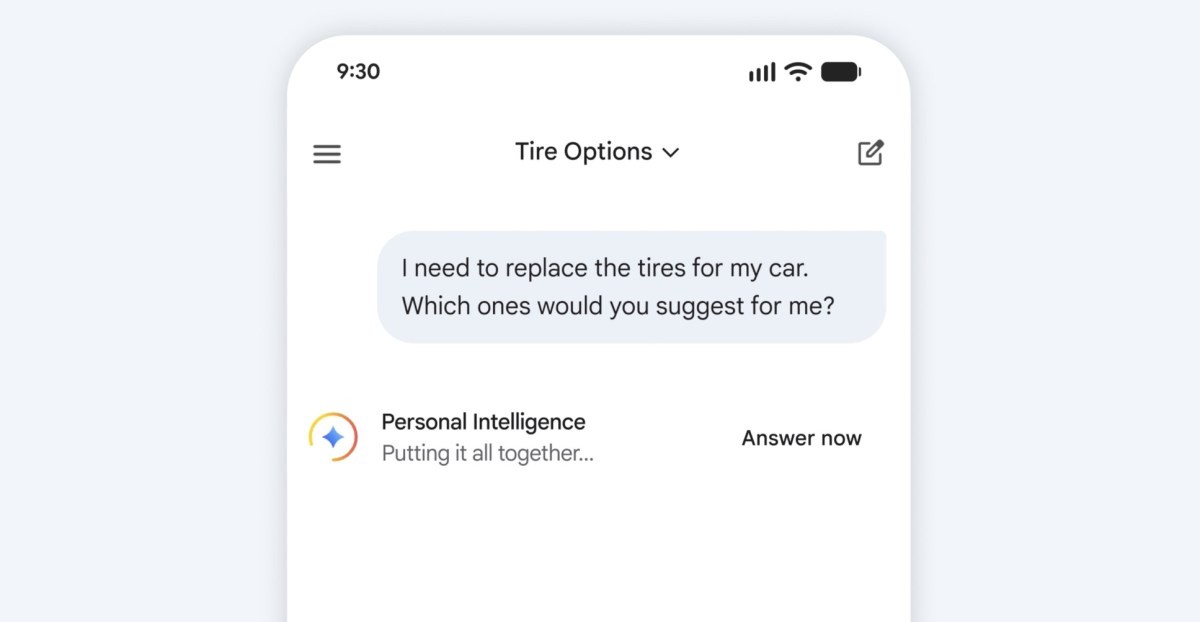
Google has expanded access to its Personal Intelligence feature for Gemini AI, making it available to all users in the US, regardless of subscription tier. Previously restricted to Google AI Pro and AI Ultra subscribers, this update allows free-tier users to connect their Google apps—including YouTube, Google Photos, and Gmail—to enhance Gemini’s ability to provide highly personalized responses.
How Personal Intelligence Works
The feature operates by automatically leveraging data from linked Google services to offer context-aware suggestions. Instead of manually providing background information in prompts, Gemini can now use existing user data to improve the relevance of its answers. This means the AI might recommend products based on past purchases or offer tailored tech support using device information it already has access to.
Privacy and Control for Users
Google emphasizes that Personal Intelligence is opt-in only. Users retain complete control over whether their data is used for personalization, and can disconnect apps at any time. The company also states that Gemini does not directly train on sensitive data like full email inboxes or entire photo libraries, instead focusing on specific prompts and model responses for training.
Implications and Concerns
This shift towards widespread access to AI-powered personalization raises questions about data privacy and algorithmic bias. While Google assures users of control over their data, the integration of personal information into AI responses could lead to unintended consequences, such as over-reliance on automated suggestions or reinforcement of existing preferences.
The expansion of Gemini’s Personal Intelligence feature marks a significant step in the evolution of AI-driven personalization, but it also requires careful consideration of its potential impact on user privacy and data security.
The rollout is currently limited to personal Google accounts, excluding business, enterprise, and education users.