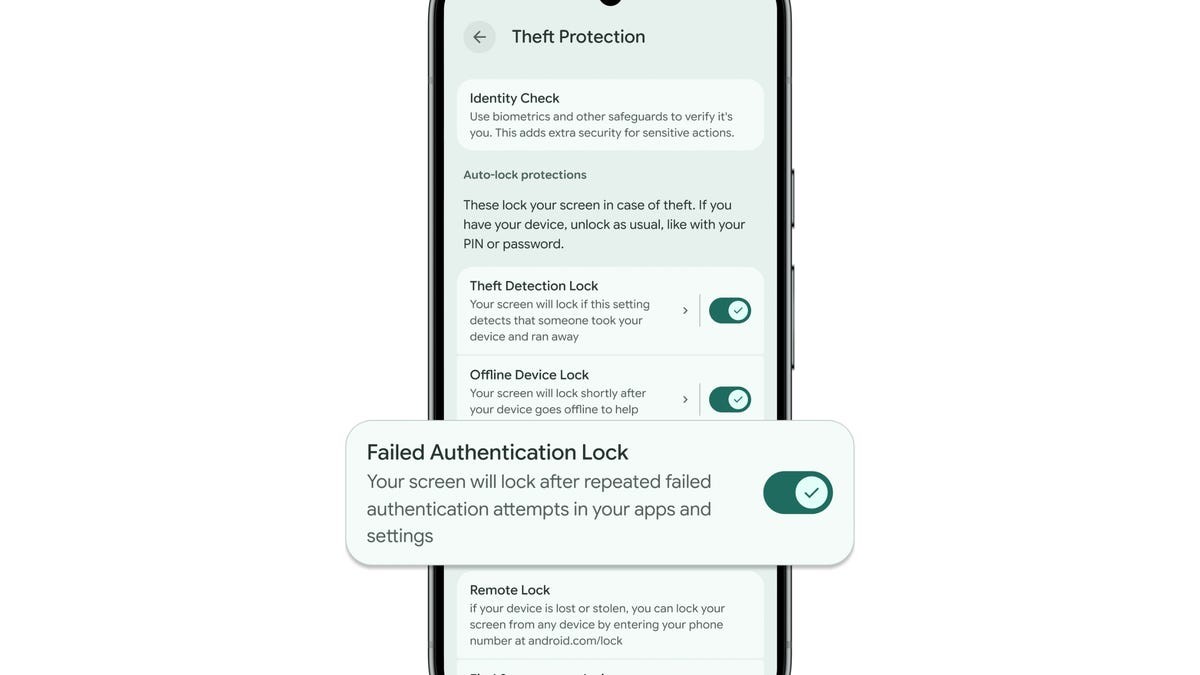
Google has significantly upgraded Android’s anti-theft features, introducing a suite of tools designed to protect user data and financial security. The updates, announced Tuesday, address a growing threat as stolen smartphones are frequently exploited for identity theft and fraud. These protections operate on multiple levels: before, during, and after a device is stolen, offering stronger defenses and greater user control.
Enhanced Authentication and Lockdowns
The core of the update is a refined Failed Authentication Lock. This feature, now configurable in Android settings, allows users to automatically lock their devices after a set number of incorrect PIN or biometric attempts. This directly counters brute-force attacks while giving users flexibility in how aggressively their phones defend against unauthorized access.
Google is also bolstering biometric security. The Identity Check system, previously limited, now extends to all apps using Android’s Biometric Prompt. This means thieves will encounter an additional biometric barrier—fingerprint or facial recognition—even if they bypass the initial lock screen.
Remote Control and Regional Rollouts
The Remote Lock feature has been improved, requiring a verified phone number and an optional security challenge to prevent misuse by someone other than the owner. This is crucial, as stolen phones are often used for immediate financial exploitation.
In a targeted response to high-theft regions, Google has activated both Theft Detection Lock and Remote Lock by default on new Android devices in Brazil. The Theft Detection Lock utilizes on-device AI to recognize sudden movements indicative of theft, instantly locking the screen to prevent immediate data access.
Why This Matters
Smartphone theft is not just about losing a device; it’s a gateway to financial and personal data. Stolen phones often facilitate immediate fraud, making rapid protection essential. Google’s updates aim to minimize the fallout from theft, preventing a single incident from escalating into broader identity and financial harm. The move to enable these features by default in high-risk areas reflects a data-driven approach to security, recognizing that proactive measures are critical in mitigating real-world threats.