I’ve reviewed the GoPro Hero11, 12, and 13 Black. Honestly? They were impressive but disappointing. Iterative. Same GP2 processor. Same tiny 1/1.9″ CMOS sensor. Just slightly better batteries and software updates. Same song. Different verse.
Then came 2024.
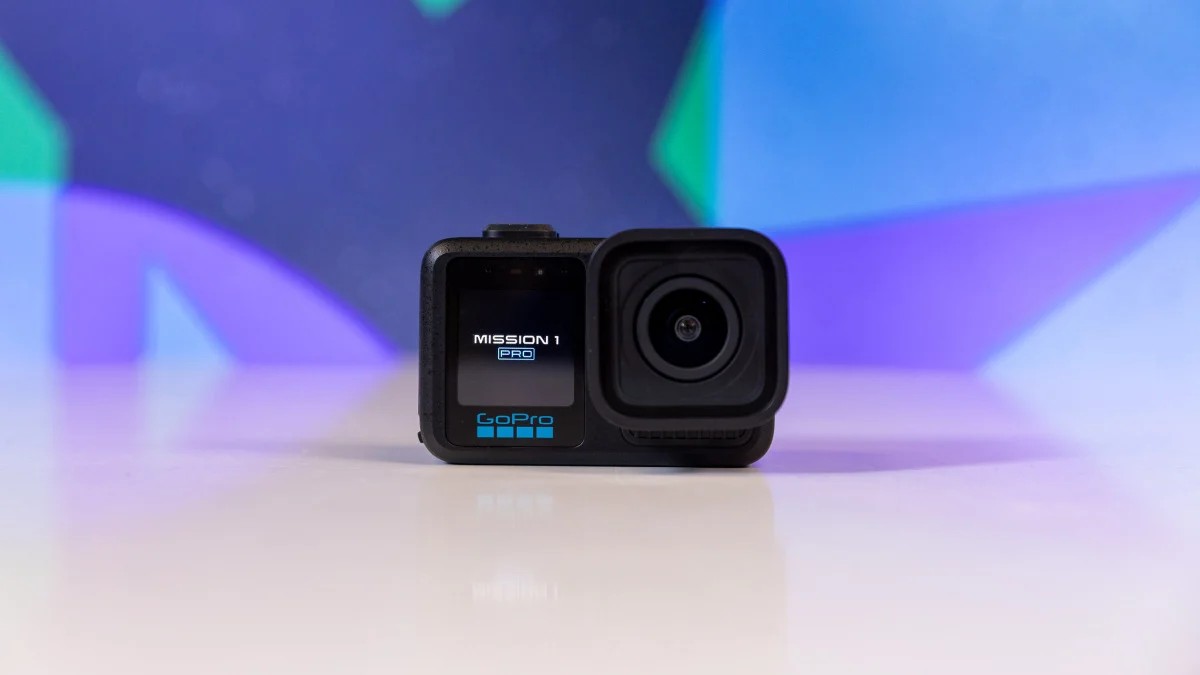
GoPro didn’t release a Hero14. Instead, they dropped a new line entirely: the Mission 1 series. This is what we’ve been waiting for. A new sensor. A new processor. Finally.
I’ve just started testing the Mission 1 Pro. My CNET colleague isn’t ready for a final verdict either, and neither am I. But I’m impressed. Excited, even.
It helps.
Does it solve everything? No. But it solves the things that matter most.
What actually changes
The Mission 1 ($599) and Mission 1 Pro ($699) hit stores May 28.
Forget the specs of the Hero line. Both these cameras use a brand-new GP3 processor. And a larger 1-inch sensor with a native resolution of roughly 8K. That is a huge jump from the Hero’s cramped sensor.
If you pay the extra $100 for the Pro, you get the real magic. 960fps slow-motion video. True 8K open-gate recording. Much better low-light performance. You can pull 44-megapixel stills out of video, or shoot 50MP action photos directly.
They are bigger. Heavier than a Hero13 Black. But they still feel like action cams. Durable. Rugged. The stabilization is there.
By the numbers
- Mission 1: $599 ($499 with subscription). Gets you 8K video at 30fps.
- Mission 1 Pro: $699 ($599 with subscription). Unlocks 960fps slo-mo and true cinematic 8K open gate.
Both share the new hardware core:
- 1-inch sensor
- GP3 processor
- 10-bit GP-Log2 color profile
- Over 5 hours battery life
- 50MP RAW photo support
There is a third option coming in Q3. The Mission 1 Pro ILS. It’s mirrorless. Interchangeable lens mount. You can attach professional glass to GoPro’s tiny body. That will cost $699. Photographers are hyping this one hard.
GoPro also launched a new accessory line. Including the wireless mic kit everyone begged for. Plus ND filters, a housing, and new grips.
Not for everyone
GoPro reps told me the Mission series is for pros. People who want total control.
If you don’t know what GP-Log2 is or use LUTs in editing, skip it.
The Hero cameras are still fine for normal people.
The Mission series competes with Sony vlogging rigs and BlackMagic cinema cameras now. The ability to shoot open gate video gives editors room to move the frame in post. That alone changes the game. The larger sensor gives you more data to play with.
Trust GoPro? Invest here. It’s a cinematic action cam now.
First impressions
Using a GoPro before, switching between lenses was digital magic. You changed the field of view in software. With the Mission 1, that feels more substantial. The sensor has more raw input.
Switching from the Linear look (22mm) to the Wide fisheye (16mm) is instant.
Editing is where the open-gate shines. You shot horizontal? Recrop to vertical (9:16) or 4:3 without losing quality. You’re not zooming in on pixels anymore. You have actual canvas to work with.
Low-light performance is noticeably better. The GP3 processor helps here. Motion tracking and Horizon Lock work tighter, too.
I also like the Quik app uploads and voice controls. Standard GoPro goodness.
The competition bites
“GoPro” used to mean “action camera.” It doesn’t anymore.
DJI and Insta360 are everywhere now. The Insta360 Ace Pro 1 had a variable aperture and Leica optics. The DJI Osmo series boasts better low light and a wider ecosystem. DJI makes drones, gimbals, and the wildly popular Mic Mini wireless system.
If you want one brand, DJI is a strong contender. Insta360 just dropped a wireless mic with a e-ink screen.
GoPro is responding with its own mic kit. But will it be enough? I doubt many casual buyers will pick the GoPro mic over the DJI options unless they are already locked into GoPro.
This strategy makes sense, though. GoPro is targeting its hardest fans. The creators. The near-pros. They leave the casual consumer to the Hero line.
Is it worth buying?
If you live and breathe action sports or video creation, yes.
The Mission 1 Pro costs more. $700 is a lot for an action cam. But compare it to a cinema camera setup? It’s cheap.
With the subscription discount, it gets better.
For the everyday user who just wants to snap photos while skiing? Stick to a Hero. It does the job.
The Mission 1 isn’t perfect. The wireless mic accessory feels redundant for now. But as a camera? It’s the best GoPro has built.