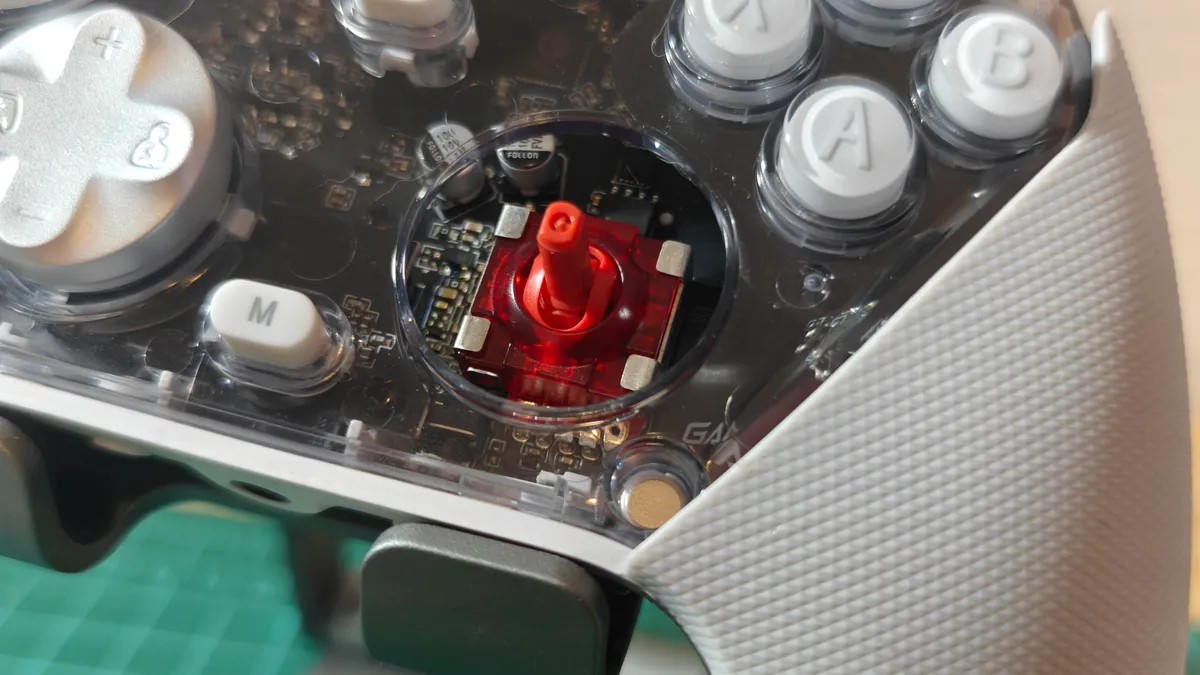
Competitive gamers are always seeking an edge, and the latest battleground is magnetic sensor technology in controllers and keyboards. Hall effect sensors and tunnel magnetoresistance (TMR) sensors are rapidly replacing traditional potentiometers to deliver more durable, precise controls. This is critical because stick drift – the dreaded unwanted movement in analog sticks – is a major frustration for players. Both technologies avoid physical contact, the main culprit behind potentiometer wear, but they differ in how they achieve this.
How Magnetic Sensors Work
Traditional potentiometers rely on physical contact between components, which inevitably leads to wear and drift over time. Hall effect sensors solve this by measuring voltage shifts caused by a magnet moving over a sensor circuit. The magnet never touches the sensor, eliminating friction and extending lifespan.
TMR sensors take a slightly different approach. They measure changes in resistance caused by a magnetic field, rather than voltage. Like Hall effect, this contactless design avoids wear and drift. A demonstration of how TMR sensors work can be found here.
Why the Shift Matters
The move to magnetic sensors isn’t just about longevity. It’s about precision and reliability. Gamers need consistent, accurate inputs, and traditional controllers often fail to deliver over time. This trend is driven by increasing demand for high-performance gaming peripherals and the desire to eliminate a common source of frustration for players.
TMR: A Potential Edge?
While both technologies solve the core problem of stick drift, TMR sensors may offer advantages. Coto Technology, a TMR manufacturer, claims their sensors are more sensitive, allowing for smaller magnets or greater precision. This also translates to lower power consumption. GameSir, for example, reports that its TMR joysticks use roughly one-tenth the power of comparable Hall effect models. Cherry also emphasizes the energy efficiency of TMR in keyboard switches.
This power savings is particularly relevant for wireless controllers. Razer’s Wolverine V3 Pro demonstrates this: the Hall effect version offers 20 hours of battery life, while the TMR variant claims 36 hours on the same battery capacity. The increased runtime could be a significant advantage for serious gamers.
Cost and Availability
Despite potential benefits, the cost of TMR sensors was initially a concern. However, the price gap has narrowed. Razer’s Wolverine V3 Pro controllers, available in both Hall effect and TMR versions, both retail for $199. Affordable options exist, with 8BitDo and GameSir integrating TMR into controllers like the Ultimate 2, G7 Pro, and Cyclone 2.
Beyond the Sensor: Durability Caveats
It’s important to note that even Hall effect and TMR sensors aren’t a silver bullet. The joystick assembly itself – the ring, the stick material, springs, and linkages – can still degrade over time. Worn rubber grips, loose springs, or dust buildup can all affect performance. While the sensor may remain accurate, the surrounding components can impact usability.
In conclusion, TMR sensors appear to offer tangible advantages over Hall effect, particularly in power efficiency for wireless controllers. The price difference is negligible, making them a compelling option for gamers seeking the most durable and responsive experience. However, gamers should still consider the overall build quality of the controller to ensure long-term reliability.