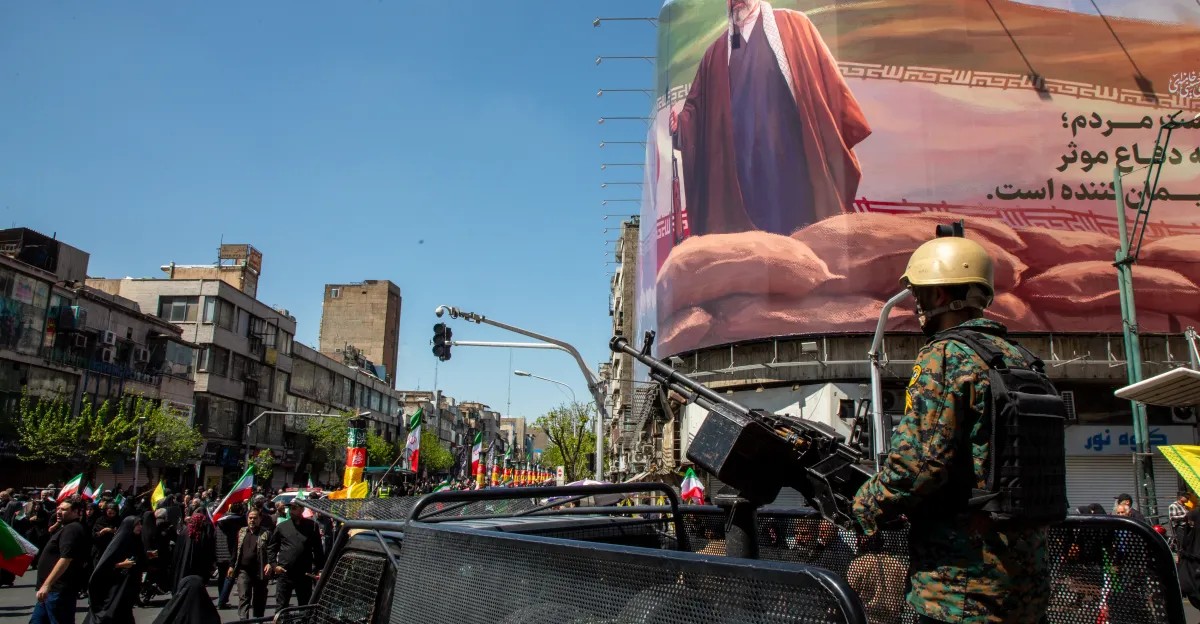
The geopolitical focus regarding Iran has shifted dramatically. While current negotiations center on a potential ceasefire and the strategic control of the Strait of Hormuz, a critical question remains in the shadows: Has Iran’s nuclear program actually been neutralized, or is it merely hiding?
Despite high-level assertions from U.S. and Israeli officials, there is a profound disconnect between political rhetoric and the technical reality of nuclear nonproliferation.
Conflicting Narratives from Washington
The U.S. administration currently presents a fractured front regarding Iran’s nuclear capabilities:
- The Hardline Stance: Secretary of Defense Pete Hegseth maintains that Iran’s nuclear program must be dismantled, suggesting force remains an option.
- The Diplomatic Shift: Vice President JD Vance, leading ceasefire talks in Pakistan, has signaled a willingness to overlook Iran’s right to nuclear enrichment.
- The “Moot Point” Argument: President Trump has suggested the program is already “irreparably destroyed,” referring to it as “nuclear dust.”
The Reality of Nuclear Capability
In an interview with nuclear expert Jeffrey Lewis of the Middlebury Institute, the gap between these political claims and scientific reality becomes clear. According to Lewis, the idea that Iran’s program is “gone” is highly questionable for several reasons:
1. The Problem of Location and Knowledge
Even if significant portions of highly enriched uranium were destroyed at sites like Isfahan, it is unknown where the rest of the stockpile is located. Material could be hidden at Fordow, Natanz, or other undisclosed sites. Furthermore, destroying hardware does not destroy expertise. The scientists and engineers who understand how to operate centrifuges remain intact, providing a “basic capability” that can be rebuilt.
2. The Limitations of Surveillance
While the U.S. maintains intense satellite surveillance, it is not a 24/7 real-time feed. There is “latency” in intelligence. Unless drones are constantly hovering over sensitive sites, the movement of nuclear material within deep, fortified tunnels could go undetected. Lewis notes that “burying” entrances to protect tunnels does not mean the contents are inaccessible; it simply means they are well-protected.
3. The “Voodoo” of Damage Assessment
The Pentagon has released various figures regarding destroyed Iranian missiles and drones. However, Lewis warns that these estimates are often unreliable:
* Lack of Baseline: Without knowing exactly how many launchers and missiles Iran had at the start, it is impossible to calculate exactly how many were destroyed.
* The Decoy Factor: Much like tactics used in previous conflicts, Iran likely employs decoys. Without ground intelligence, it is difficult to distinguish between a real target and a fake one.
The Geopolitical Lesson: The “North Korea” Model
The current conflict may inadvertently send a dangerous message to other nations considering nuclear weapons.
History shows a pattern: countries that disarm—such as Iraq, Libya, and Iran (via agreements)—have often felt “double-crossed” by the international community. Conversely, North Korea has maintained its nuclear program and remains stable. For a potential proliferator, the lesson is clear: It is safer to finish the bomb quickly than to rely on a disarmament agreement.
“I’d rather be North Korea or Pakistan than I would Iran, Iraq, or Libya.” — Jeffrey Lewis
Conclusion
While political leaders debate whether Iran’s nuclear threat is resolved, the technical reality suggests a high level of uncertainty. The combination of hidden stockpiles, human expertise, and the limits of intelligence means the pathway to a nuclear weapon may still exist, despite recent airstrikes.