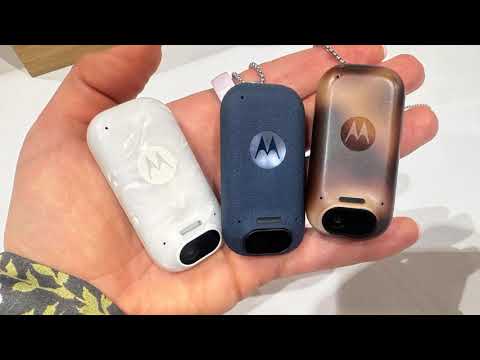
Motorola is actively exploring alternative wearable AI designs beyond smart glasses, with Project Maxwell – a discreet, pendant-shaped device – leading the charge. Unveiled at Mobile World Congress (MWC) in Barcelona, Maxwell isn’t intended to replace smartphones, but rather to complement them as a hands-free, heads-up companion powered by advanced AI.
The Rise of Wearable AI
Project Maxwell joins a growing trend of AI wearables, including devices from Plaud and Looki, leveraging large language models to deliver a novel user experience. Unlike previous standalone AI attempts, Motorola – a major player in the mobile market – is backing this concept with substantial resources.
According to Mohammed Abdul-Gaffoor, executive director of engineering at Motorola’s 312 Labs, Maxwell’s core function is to enhance presence by providing real-time assistance without requiring constant device interaction. The pendant can translate languages, offer personalized recommendations, and provide turn-by-turn directions.
Data as the Core Benefit
Maxwell’s true potential extends beyond immediate utility. The device acts as a learning sensor, collecting data about user preferences and surroundings to provide context for other connected devices. This ecosystem integration is crucial, as Motorola envisions Maxwell working seamlessly with its Qira smart assistant and beyond.
The design emphasizes natural human interaction. Abdul-Gaffoor notes that voice and vision are the most intuitive methods, and modern technology now allows for direct, hands-free engagement. The device itself is designed to be aesthetically pleasing, coming in a variety of colors and patterns to avoid the “geeky” stigma often associated with wearables.
Motorola’s Experimental Approach
Project Maxwell signifies Motorola’s broader commitment to innovation in the wearable AI space. The company is actively exploring new concepts, including bendable and rollable phone designs, signaling a willingness to push boundaries beyond conventional devices.
Qualcomm’s Wear Elite Chip: The Next Step
The launch of Qualcomm’s Snapdragon Wear Elite chip at MWC promises increased power efficiency and on-device processing capabilities, opening up new avenues for Motorola’s experimentation. Francois LaFlamme, VP of Strategy and Marketing at Motorola, confirms the company intends to leverage this platform to further explore concepts like Maxwell and push even beyond current demonstrations.
Motorola’s approach is not limited to refining existing designs; the company is evaluating a range of form factors and experiences, suggesting a long-term vision for wearable AI that extends beyond smart glasses and smartwatches.
In conclusion, Motorola’s Project Maxwell is not just another wearable prototype; it’s a strategic move toward a future where AI seamlessly integrates into everyday life, offering a more natural and contextualized user experience. The company is positioned to lead the charge in this emerging market, and with Qualcomm’s backing, the possibilities for wearable AI are expanding rapidly.