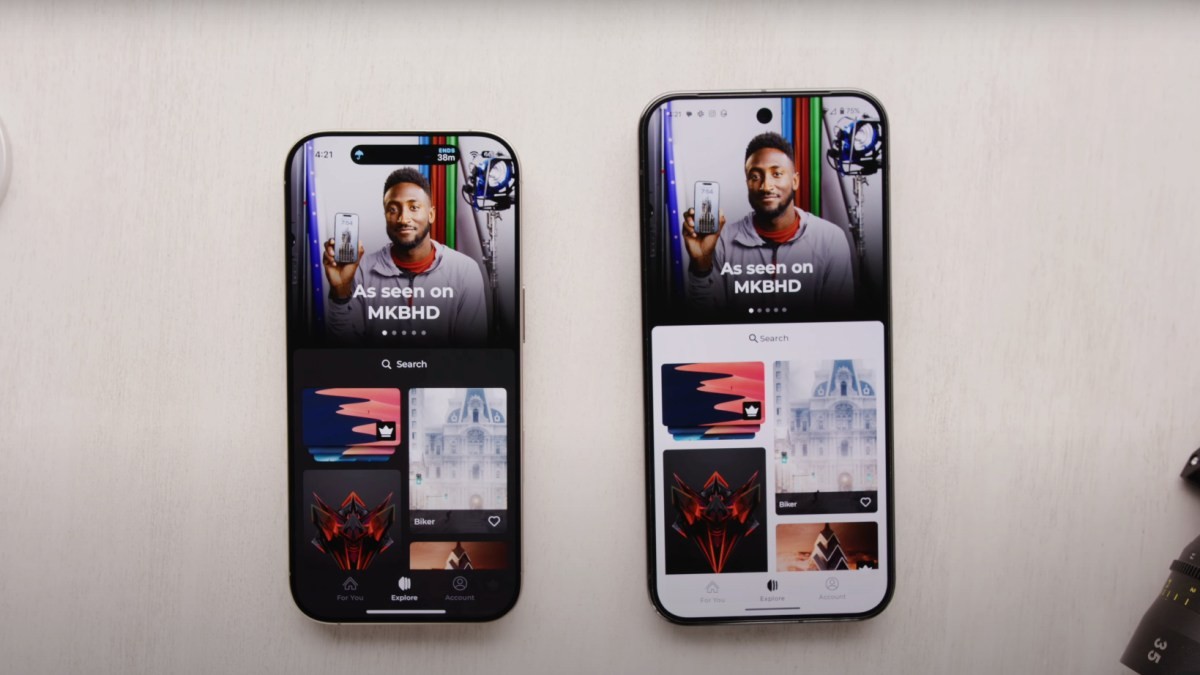
Tech influencer Marques Brownlee, known as MKBHD, announced the impending closure of his wallpaper app, Panels, after struggling to attract a sustainable user base. Despite initial hype fueled by Brownlee’s 20 million YouTube followers, the app failed to overcome fundamental market challenges.
The Rise and Fall of Panels
Launched in September 2024, Panels aimed to capitalize on Brownlee’s popularity by offering curated, high-resolution wallpapers for a subscription fee. The app briefly topped app store charts, achieving 900,000 lifetime downloads and $95,000 in revenue. However, momentum quickly faded, with downloads plummeting to 3,000 last month and revenue dropping to just $500.
Brownlee himself admitted the project made mistakes in its execution. The app’s $50 annual or $12 monthly subscription model proved difficult to sustain, as users generally expect wallpapers to be free or easily obtainable elsewhere. Despite the influencer’s backing, converting curiosity into long-term paying customers proved unsustainable.
Why It Didn’t Work: A Market Misunderstanding
The failure highlights a key issue in the app economy: paying for digital assets that are often freely available is a hard sell. While Brownlee’s wallpapers are frequently admired in his tech reviews, translating that admiration into a paying market proved impossible. The app’s concept was niche, and the team struggled to scale it effectively.
“We knew it was niche, but we made mistakes in making our first app, and ultimately, we weren’t able to turn it into the vision I had,” Brownlee stated in a video announcement.
What Happens Next?
Panels will officially shut down on December 31, 2025, with refunds issued to active subscribers. The app’s code will be open-sourced, allowing other developers to build upon its foundation. User data will be deleted after the shutdown.
Despite the app’s failure, Panels offers a lesson in the realities of app development: even strong personal branding and initial hype cannot guarantee success without a viable market and effective execution. The project’s demise underscores the difficulty of monetizing digital aesthetics in a world where free alternatives abound.