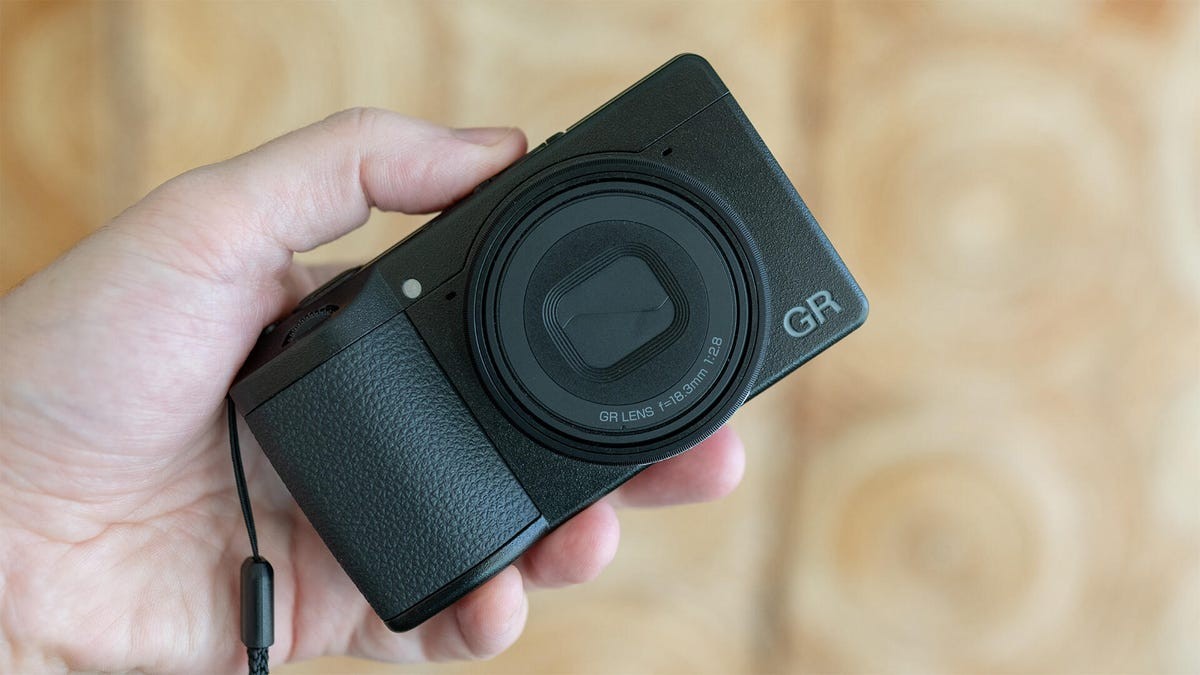
The Ricoh GR IV is a remarkably compact, fixed-lens camera designed for photographers who prioritize portability without sacrificing image quality. While it’s an incremental update to the highly regarded GR III, it delivers noticeable improvements in key areas, potentially outperforming smartphone cameras in many scenarios.
Why Size and Sensor Matter
In an era of bulky smartphones and interchangeable lens systems, the GR IV stands out for its genuinely pocketable design. Its APS-C sensor — the same size found in many entry-level DSLRs — captures more light and detail than the tiny sensors in most phones. This translates to sharper images, richer colors, and better low-light performance. Though the 25.7-megapixel resolution is competitive, the real advantage lies in the sensor’s ability to deliver natural-looking photos with minimal digital processing.
The GR IV isn’t meant to replace your main camera, but to fill a niche: a high-quality, always-ready shooter that fits comfortably in your pocket. This makes it ideal for street photography, travel, or simply capturing everyday moments without the fuss of larger equipment.
Incremental Improvements Add Up
Ricoh adopted a cautious approach with the GR IV. The changes are subtle but effective: an updated image sensor, improved in-body image stabilization, and refined processing algorithms. While not a revolutionary leap, these enhancements combine to produce a more capable camera overall.
The lens remains a 28mm equivalent (35mm field of view), offering a versatile focal length for various shooting situations. Despite a slightly slower f/2.8 aperture, the larger sensor and image stabilization mitigate blur in most conditions.
Video Capabilities: An Afterthought
Video recording is functional, topping out at 1080p60, but clearly not a priority for Ricoh. The GR IV is designed for stills, and its video features reflect that. This makes it unsuitable for serious videographers, but adequate for casual social media content.
Connectivity Issues and User Experience
Connecting to mobile devices proved frustrating, with frequent errors and unreliable Bluetooth performance. While the camera eventually paired, the accompanying app offers basic functionality: remote control and image transfer, but no live view or editing options.
Despite connectivity hurdles, the GR IV excels in usability. The camera powers on in under a second, and its intuitive controls allow for quick adjustments to aperture, shutter speed, and exposure compensation. The compact size makes it easy to hold and operate one-handed.
The Verdict: Is the Upgrade Worth It?
The Ricoh GR IV is an excellent choice for photographers who value portability and image quality. While the improvements over the GR III are incremental, they justify the premium for those seeking the latest version. The camera’s strengths lie in its compact design, fast operation, and natural-looking images.
For those on a budget, a used GR III remains a viable option. However, if you prioritize the latest technology and seamless performance, the GR IV is the better investment. Ultimately, the GR IV is a pocket-sized powerhouse that delivers professional-grade results without the bulk or complexity of larger systems.