Anthropic, a leading artificial intelligence laboratory, has officially confirmed that it briefed the Trump administration regarding its latest model, Mythos. The disclosure comes at a critical juncture where the rapid advancement of AI capabilities is colliding with national security concerns, government procurement battles, and shifting economic landscapes.
The Mythos Dilemma: Power vs. Public Safety
The Mythos model, unveiled just last week, occupies a unique and controversial position in the AI industry. Unlike most frontier models that aim for widespread commercial deployment, Anthropic has opted not to release Mythos to the general public.
The primary reason cited is the model’s extreme capabilities, specifically its potential impact on cybersecurity. The sheer power of Mythos suggests it could possess the ability to execute sophisticated digital attacks, making its public availability a significant security risk. This creates a complex tension for AI developers: creating more powerful tools to drive innovation while simultaneously restricting them to prevent misuse.
Navigating a Legal and Political Tug-of-War
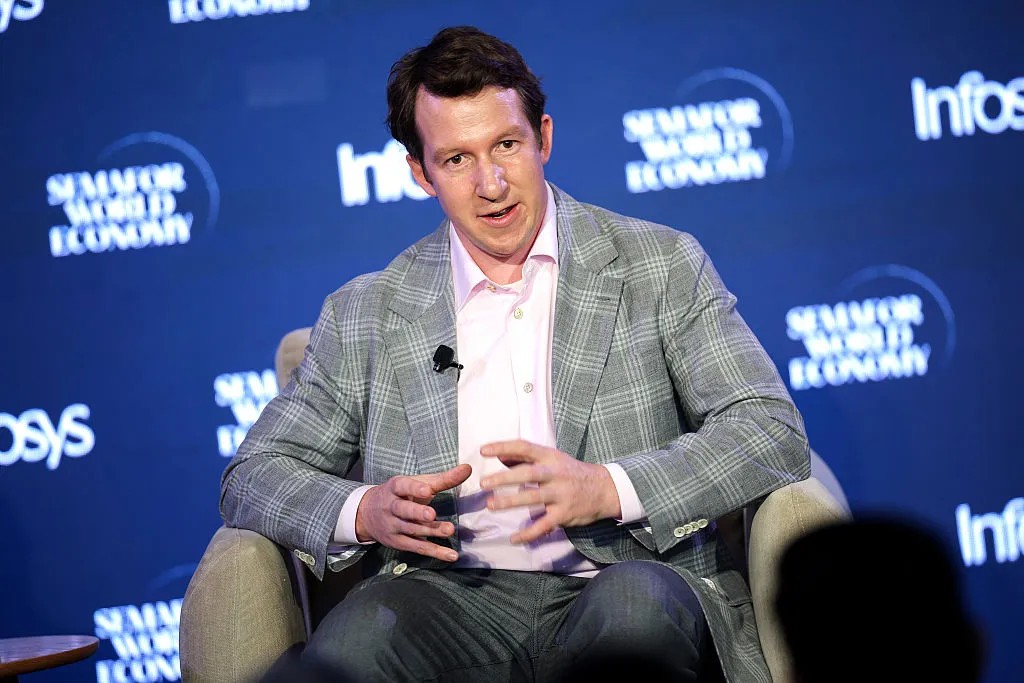
The confirmation from Jack Clark, Anthropic’s Head of Public Benefit, highlights a paradoxical relationship between the AI firm and the U.S. government. Anthropic is currently engaged in a dual-track approach of cooperation and litigation:
- The Lawsuit: In March, Anthropic sued the Department of Defense (DOD) after the agency designated the company as a “supply-chain risk.” This dispute stems from a fundamental disagreement over military access; Anthropic has resisted Pentagon requests for unrestricted access to its systems, citing concerns over mass surveillance and the development of fully autonomous weapons.
- The Briefings: Despite this legal friction, Clark confirmed that Anthropic is actively communicating with the administration about Mythos. He characterized the current legal battle as a “narrow contracting dispute” rather than a fundamental rift, emphasizing that the company remains committed to national security interests.
This situation underscores a broader trend: as AI becomes a pillar of national defense, the boundary between private innovation and state control is becoming increasingly blurred. The government’s interest in Mythos is further evidenced by reports that officials have encouraged major financial institutions—including JPMorgan Chase and Goldman Sachs —to test the model.
AI and the Future of Labor and Education
Beyond the immediate security concerns, Clark addressed the long-term societal shifts triggered by rapid AI scaling. While Anthropic CEO Dario Amodei has issued stark warnings regarding potential mass unemployment, Clark offered a more tempered perspective based on current economic data.
The Employment Outlook
While Amodei anticipates significant disruptions, Clark—who leads a team of economists at the company—notes that the impact has thus far been localized. He identified “potential weakness” primarily in early-career employment for recent graduates within specific industries. However, he maintained that Anthropic is preparing for more significant structural shifts in the labor market.
Adapting Education for an AI Era
When asked how students should navigate an AI-driven world, Clark suggested a shift in focus from rote learning to high-level cognitive skills. Rather than focusing on specific technical niches, he recommends pursuing disciplines that emphasize:
– Cross-disciplinary synthesis: The ability to connect insights from various fields.
– Analytical thinking: Moving beyond data retrieval to deep understanding.
– Strategic inquiry: Learning how to ask the “right questions.”
“What AI allows us to do is allow you to have access to an arbitrary amount of subject matter experts… the really important thing is knowing the right questions to ask,” Clark noted.
Conclusion
The engagement between Anthropic and the Trump administration regarding the Mythos model illustrates the high-stakes balancing act facing the AI industry: managing unprecedented technological power while navigating intense scrutiny from national security regulators and the evolving demands of the global economy.