


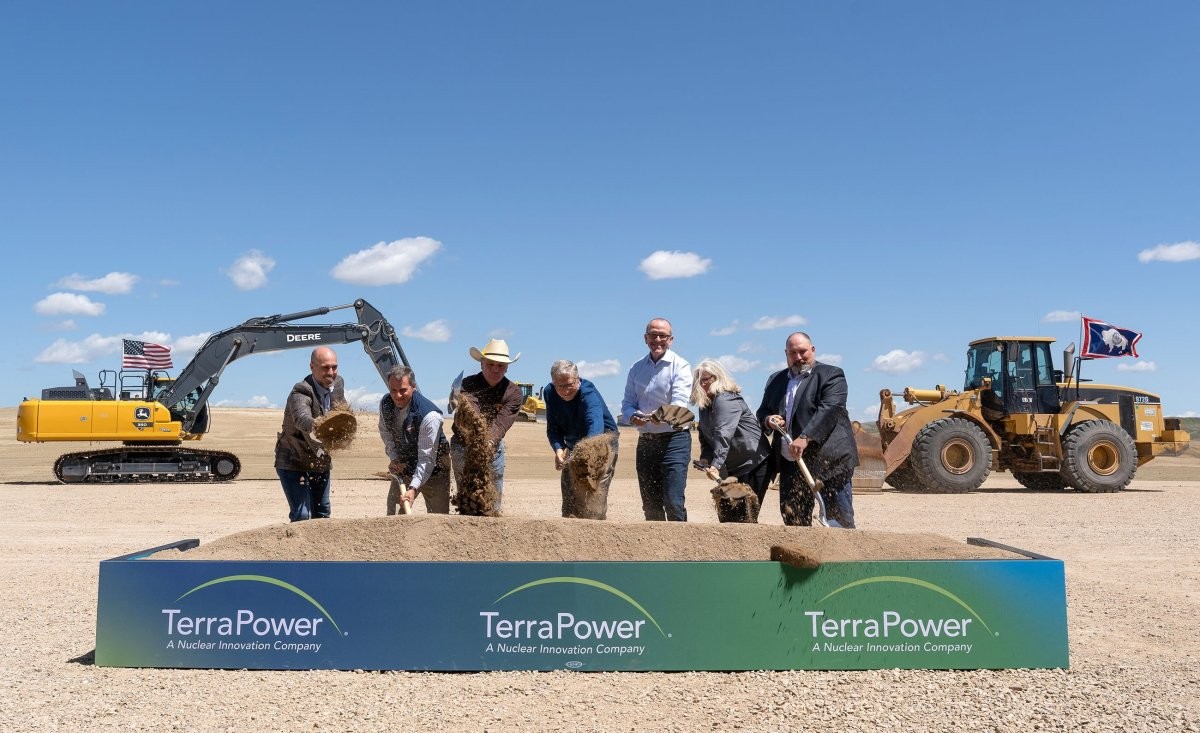
The Nuclear Regulatory Commission (NRC) has approved TerraPower’s application to construct a new nuclear reactor in Wyoming, marking the first such permit granted in nearly a decade. This decision signals a potential shift in US energy policy, driven by growing electricity demands and the need for reliable baseload power.
A New Design for a Changing Grid
TerraPower, founded by Bill Gates in 2015 with backing from Nvidia and GE Vernova Hitachi, will build a 345-megawatt Natrium reactor. This capacity falls between traditional large reactors and the smaller modular designs favored by other startups, offering a balance between scale and flexibility.
What sets Natrium apart is its use of molten sodium as a coolant instead of water – a method not approved for commercial use in the US in over 40 years. TerraPower argues this design is safer, and the system’s ability to store excess energy as heat in insulated tanks addresses a key challenge with nuclear power: the need for consistent operation to maximize efficiency. By storing heat, Natrium can compensate for fluctuations in renewable energy sources like wind and solar.
Regulatory Landscape and Rising Investment
The approval process followed standard NRC procedures, distinct from recent loosened safety rules applied only to Department of Energy-owned land. This highlights a pragmatic approach to nuclear licensing, separate from the broader push for deregulation.
The project’s green light comes amid a surge in investor interest in nuclear startups. Driven by escalating power needs from data centers and government pressure to expand generating capacity, these companies have collectively raised over $1 billion in recent months. TerraPower itself has secured $1.7 billion, including a $650 million round closed in June.
Challenges Remain Despite Momentum
Despite growing investment, nuclear power faces significant economic hurdles. Historically, nuclear has been among the most expensive energy sources, due to construction cost overruns and competition from rapidly decreasing solar, wind, and battery storage costs. Overcoming these challenges will be crucial for TerraPower and the broader nuclear industry to secure a sustainable future.
The approval of the Natrium reactor is a major step forward, but its long-term viability will depend on managing costs and demonstrating the benefits of molten sodium cooling in real-world operations.
This landmark approval suggests that nuclear power is regaining traction as a viable component of the energy mix, particularly in the context of growing demand and the need for reliable baseload capacity.


