It’s loud. It’s fast. It’s getting a lot smarter.
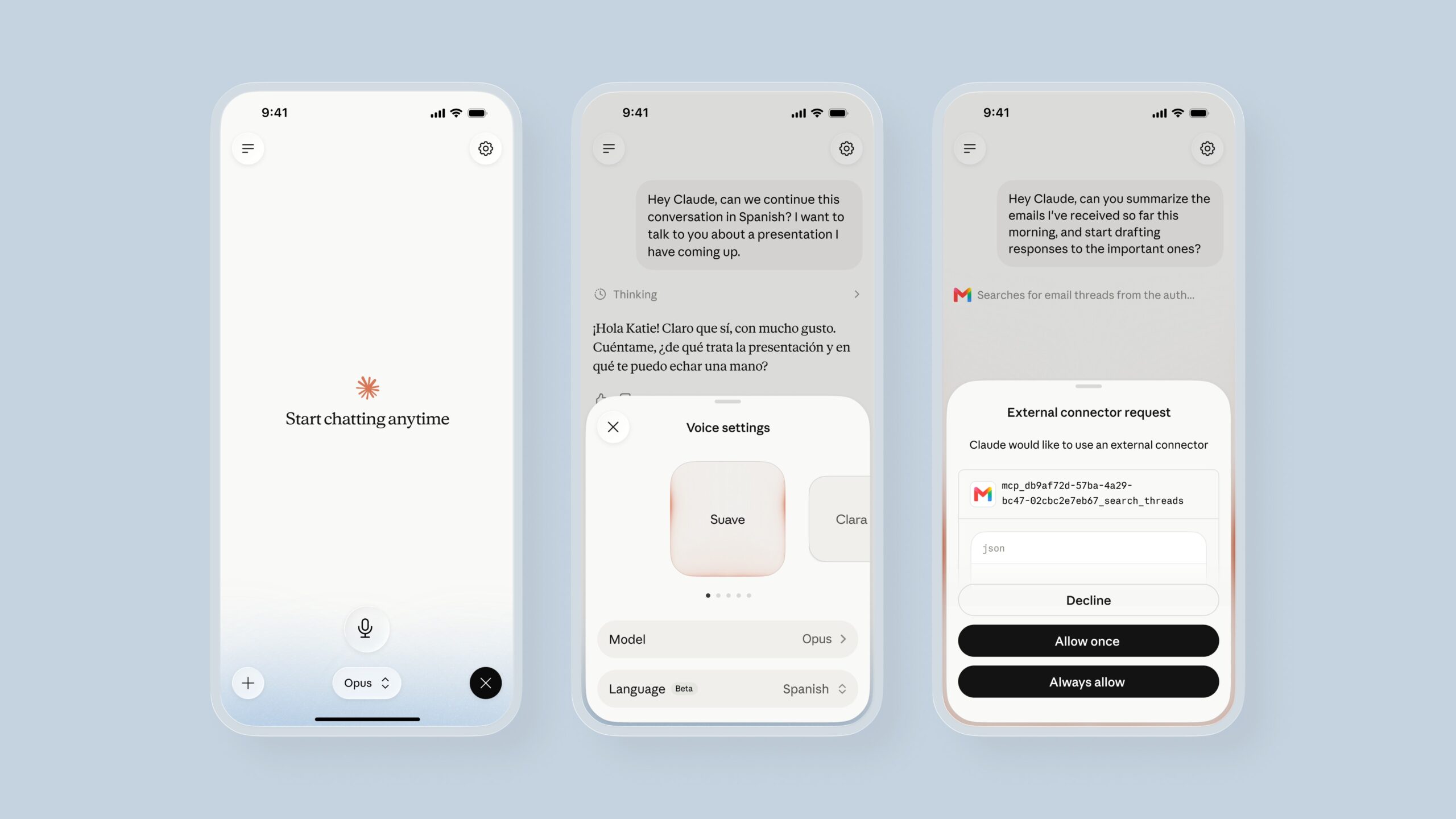
Anthropic rolled out a major update to Claude’s voice mode this Thursday, and it’s not just a patch. It’s a shift. The update moves voice interactions off the lightweight Haiku model and onto the heavier, more capable Opus and Sonnet models.
If you’ve used voice AI before, you know the drill. You talk. It listens. It answers. But it often felt… thin. Like talking to a very fast intern who doesn’t quite get the nuance. That changes now.
Why You Should Care About the Model Switch
Previously, voice mode ran solely on Haiku. Why? Because Haiku is fast. Cheap. Efficient for quick, simple queries.
But deep conversation? Complex problem solving? Haiku struggles there. It bounces back quick answers but lacks depth.
Now, you can run voice conversations through Opus and Sonnet.
Opus is Anthropic’s most powerful model. It handles reasoning like a human expert. Sonnet sits in the middle—capable, fast, and surprisingly thoughtful. By putting these on voice, Anthropic is telling you: Don’t just ask for the weather. Ask for help drafting your thesis.
You can even switch models mid-sentence. Running a quick fact-check? Stick with Haiku. Hit a complex logic puzzle? Swap to Opus without starting a new chat.
Voice mode now runs on Claude Opus and Sonnet, not just Haiku.
And here’s the practical kicker: You can switch from voice back to text instantly. No need to restart. You’re driving, you dictate a long note, traffic stops, and you finish typing. Seamless isn’t the word. It’s just there.
Talking to Your Tools, Not Just the Cloud
This is where it gets dangerous. And useful.
Anthropic is adding voice controls for third-party apps. Gmail. Slack. Google Calendar. Canva.
You don’t type commands. You speak them.
“Slack, tell the team I’m late.”
“Calendar, push the 3 PM meeting to 4 PM.”
“Summarize my top three emails.”
It sounds simple. But the friction of typing these commands away. The mental load of context switching. Gone.
AI is becoming agentic. It’s moving from a search engine you chat with to a tool that does things. Voice is the natural interface for action.
Paid users get access to all connected third-party apps. Free users? You’re stuck with one connected tool. But for many, one tool is enough.
Languages Beyond English
The world doesn’t speak English.
Anthropic has expanded support to include:
- English
- French
- German
- Hindi
- Indonesian
- Italian
- Japanese
- Korean
- Portuguese (Brazilian)
- Spanish (Latin America)
- Spanish (Spain)
You can switch languages by voice, by menu, or just by starting a new conversation in a different tongue. It’s manual right now. Not automatic. But it’s there.
Who Gets What?
The update is in beta. Available on mobile, desktop, and web.
Free users? You get Haiku only. One connected tool. All languages. It’s a taste.
Paid users? Opus and Sonnet on voice. All third-party apps. All languages.
All usage counts against your standard limits. So don’t go crazy.
The Real Question
Voice AI has always been a novelty. A party trick.
With Opus and Sonnet in the driver’s seat, it’s becoming a workflow.
Why type when you can talk? Why navigate menus when you can say “open Gmail”? Why start over when you can switch modes mid-stream?
It’s faster. It’s deeper. It’s less friction.
But there’s a catch. Opus is expensive. Running it on voice, in real-time? That burns tokens. Fast.
Will Anthropic cap voice usage differently? We’ll see.
For now, the upgrade is live. Try it. Talk to Claude. See if it feels different.
Because it does.