You can play music just by moving your hands. It sounds like a trick, but in the early 1900s it was magic. RCA claimed that the device was so simple that anyone could sound like an opera star. They weren’t completely wrong, but their first products looked more like mid-century furniture than futuristic instruments.
The RCA theremin was made around 1930 and is a hollow wooden cube. It has a sloping lid. It is supported by four thin, tapered legs. If it weren’t for the two tall antennas sticking out of the top, you might think it’s a small desk or side table in your living room. It’s a strange contrast to its promise of being the world’s first electronic musical instrument.
Inside a wooden box
Sound is not produced by strings or reeds. It comes from invisible electromagnetic fields. Inside its wooden cube, vacuum tubes, oscillators, coils and wires work together. These components create a field around the two antennas.
Players didn’t touch the instrument. They waved their hands.
Moving your hand near the vertical antenna changes the pitch. Move close to the loop antenna to adjust the volume. The results were explained in different ways. Some called it a purified, magnified saxophone. Some said it sounded like a combination of amplified children’s whistles and the squawks of early radio speakers.
Skills matter. Beginners may only be able to produce atonal blats. A master can make it sing. Theremin virtuosos created sounds as haunting as the arias played at Carnegie Hall.
The history of the Theremin is complicated, but its connection to Russian espionage technology is undeniable.
Next, let’s look back at this history.
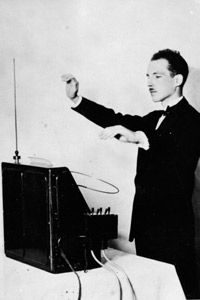
When Léon Theremin began adjusting proximity sensors for the Russian government in the early 1920s, he did not intend to compose music. He wanted a land-based sonar. A device that detects objects using an electromagnetic field. In this he failed. He was completely successful in something completely different.
He created the first musical instrument that could be played without touching it.
He presented it to Vladimir Lenin. History shows that the Bolshevik leader liked it. Lenin sent Theremin on a tour to Europe. The public liked the “ether-wave” concert very much. The Theremin eventually moved to the United States. In 1928, he received a patent for the Thereminvox, known as the world’s first electronic instrument. Avant-garde composers soon recognized its potential.
In 1929, Joseph Schillinger performed the first performance of the piece “First Airphonic Suite” in New York. The soloist was a theremin. The city was full of life. RCA bought the manufacturing rights. They started an advertising campaign promising to place a theremin in every living room.
It failed.
From a business perspective, it was a disaster. However, RCA models from the 1930s are still regarded as holy grail by collectors. Before electric guitars and synthesizers appeared, it sounded magical. Virtuosos such as Clara Rockmore and Lucie Rosen continued to kept the flame alive.
Robert Moog’s company started manufacturing in 1954. This was before Moog released his famous modular synthesizers. The cult following of this instrument have been growing steadily. It has become the standard sound of spooky sci-fi films. It is heard in symphonies and in the Tom Waits.
Only 485 copies of the original version were sold, but the instrument has played an important role in popular culture. Consider these appearances:
- The Green Hornet (1936): The radio program opens with the hero’s cry, followed by a theremin imitating a hornet’s hum.
- The Lost Weekend (1945): The chilling tone reflects the protagonist’s struggle with alcoholism.
- The Day the Earth Stood Still (1951): The whine provides an otherworldly backdrop for the alien visitor.
- Cartoons and horror: appeared in The Flintstones, Batman and the 2004 film Hellboy.
It looks easy. You wave your hands. No fingerings. So why do musicians call it the most difficult instrument?
The physics of Non-Contact sound
This science originated at the St. Petersburg Institute of Physical Technology. Theremin noticed a strange effect. As he moved his body in and out of the radio frequency oscillator circuit, the frequency changed.
The human body has capacitance. It has an electrical charge. As you approach the oscillator, the electromagnetic field is disturbed. Theremin was a cellist, and by hobby, wondered if it was possible to create music with that capacitance.
He wanted an instrument that would produce sound without using mechanical energy. He described it as a conductor. There is no stick. There are no strings. Just wave.
This device uses two primary circuits. pitch circuit. volume circuit.
Audio circuits are based on heterodyning. Here two tuned oscillators are mixed. One oscillator has a fixed frequency. The other is variable. The variable oscillator is connected to the vertical antenna. The signals are mixed. One frequency is subtracted from the other. The difference is amplified. You get an audible tone.
Move your hand closer to the antenna. Change the capacitance. Change the frequency. The pitch goes up or down.
The volume circuit works the same way. It has an oscillator connected to a horizontal antenna. Wave your hand near it. The volume may increase or decrease due to electromagnetic field disruption.
Sounds simple. Flutter your fingers. to make noise.
But precision is everything.

The theremin is often thought of as just a novelty instrument. Two antennas. No keys. Just wave your hands and hope for the best. But anyone who has tried to coax a clean note out of one knows the reality is harsh. Without proper technique, you can sound like a dying animal. However, once you master it, you can sing.
Not everyone can sing this song. In fact, very few do. To understand why, we need to look at the people who cracked the code, the physics that make it work, and the subtle variations that change how we play it.
The Titans of the Theremin
They didn’t just play; They define what the device is intended for.
Clara Rockmore is widely regarded as the greatest thereminist of all time. She didn’t just accept the limitations of the medium; Rockmore developed sophisticated fingering techniques that allowed precise pitch control. Instead of guessing with her whole hand, she used finely thought-out movements that give him the precision of a violinist. Her approach proved that the theremin is not just a generator of sci-fi effects, but a full-fledged melodic instrument.
Lucie Bigelow Rosen chose another path. As a student of inventor Leon Theremin, she treated the device as both art and a design project. Rosen kept detailed notes on the design and construction of the theremin, recording the nuances of its structure and sound. Her personal instrument was designed by Leon Theremin himself and is still on display at his former home, Caramoor, This is a relic of the instrument’s golden age, preserved in one of the places where it was actually played.
Samuel Hoffman brought the theremin to the masses, but not through the concert hall. He demonstrated the versatility of the theremin, producing the kind of strange, swirling sounds in From the Sky, The Day the Earth Stood Still or A Sophisticated Crime that would instead be used to create mood and tension in the film. It’s not just a classic melody.
How the theremin really works
The user interface is deceptively simple. Two antennas. That’s it.
A vertical, straight antenna controls the pitch. A horizontal, looped antenna controls volume. The device produces an electrofield around these antennas. Your body works as part of a circuit. When you move your hand into the field, the capacitance changes, and the theremin’s internal oscillator converts the capacitance into sound.
Moving the right hand up and down on the vertical antenna changes the frequency. The closer your hand, the higher the pitch. Unlike a guitar or piano, pitch is determined by physical contact. Distance is everything here.
But the key word is control. A novice might wave their hands wildly, resulting in erratic, cacophonous cries. As Rockmore put it, the Maestro performed “on the wings of a butterfly”. Tiny, precise adjustments. The left hand hovers over the looped antenna to modulate volume. Too much movement, and you lose the tone. Too little, and you get no expression.
“You must play with butterfly wings.” – Clara Rockmore
This is why the theremin is so difficult. You need perfect pitch, fine motor control and excellent coordination. The first time you play, you’ll sound drunk. The notes will waver, the volume will jump. Building the muscle memory needed to keep a melody in tune requires hours of practice. Once you have that, you can add vibrato. Instruments can rise like Pavarotti or fade to a whisper.
Why volume control is important
Most theremins have two antennas. But some people only have one. These are theremins with a fixed volume control.
They are simpler. Now it’s easier to play. Focus entirely on tone. The volume is kept constant or set with a Knob before starting. For beginners, this is a useful springboard. Remove the variables from the equation. But it also deletes the show. The theremin’s appeal is its ability to expand and disappear in the hands of the performer. Without this, layers of emotional depth are lost.
The evolution of design
Leon Theremin’s original invention was just the beginning. For decades, designers have fine-tuned circuits, antenna shapes and materials. Some versions prioritize stability. Some people prioritize range. Some are designed with studio precision in mind. Others have live performances.
Curious about the different types of theremins? The following page looks at the various variations that have appeared since the 1920s. This equipment is constantly evolving from old clones to modern digital hybrids. nuclear

The Theremin’s reputation as a hackable was born out of its relatively simple circuitry and a certain excited novelty. This is one of the easiest tools for tinkerers. You have old vacuum tube equipment. A musical toy made of Lego blocks. There’s a theremin and a set of theremins for every taste.
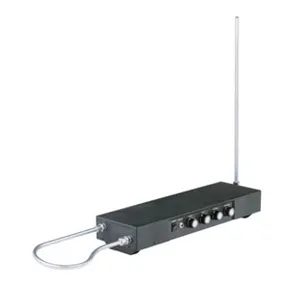
Probably the most popular version on the market today is the Moog Etherwave Theremin. The standard Moog Etherwave includes tone and volume antennas and rotary knobs to control the waveform and sensitivity. Moog Etherwave Plus includes all the features of the basic version and also works as a controller for other Moog analog devices. Last but not least, the Moog Etherwave is also available in kit form, allowing users to customize the theremin case and circuitry.
Analog theremins built with valve circuits have also attracted considerable interest from theremin enthusiasts who wish to recreate the elusive sounds of earlier instruments. Theremin expert Arthur Harrison founded Theremin.us, a website dedicated to disseminating information about the theremin and theremin-building. In addition to selling kits, he also offers detailed how-to articles with diagrams for building tube-powered theremins. But even Mr. Harrison warned of the dangers of building these devices, which use deadly AC voltage.
Other types of theremins include:
-
Optical (Photo) Theremin: These instruments use optical sensors or infrared fields instead of electromagnetic fields. optical theremins are more novelty than high art and can be made from spare parts. The website Legoengineering.com also includes instructions for making a simple “light” theremin from NXT Lego bricks with light sensors.
-
Solar Theremin: The Solar Theremin is a special optical Theremin that captures and converts solar energy to produce musical sounds. Make magazine sells simple solar-powered theremin kits for under $20 through its Makershed store.
-
Theremin Controllers and Video Theremin: New interactive video game technologies such as the Wii and Xbox Kinect have been hacked to allow players to use a game controller (or in the case of the Kinect, their body) to manipulate other synthesis devices to produce theremin-like sounds. Synthesizer enthusiasts have also written software code that allows users to play a “video” theremin on the Xbox Kinect.
With its endless strangeness and great mysteries, the Theremin has inspired generations of musicians, scientists, creators and artists. And no doubt it will inspire generations to come.
More information about this noir novelty can be found on the next page.
Theremin FAQ
How does the theremin work?
A theremin stands in front of an instrument and moves their hands along its two antennae. The distance from one antenna determines the frequency and pitch, and the distance from the other antenna determines the amplitude. The sound is amplified and transmitted through the speaker.
How much does a theremin cost?
A quality theremin will cost anywhere from $200 to $400. A beginner can buy it for just $100. Of course, there are also expensive options for professionals, which can cost up to $650.
What is a Theremin Kit?
The theremin is an electronic instrument that can be played without touching. When the player moves his hands, the antenna picks up the signal and controls the volume and pitch. Theremin kits contain all the parts and instructions you need to build your own theremin. They make it easy to build even for people without technical experience.
Are theremins still in use?
The instrument became popular again after the release of the 1993 film Theremin: An Electronic Odyssey. It is used by many musicians such as Pixies, Rolling Stones and White Stripes.