How the #StayAlive app connects bystanders to an AED and saves lives in cardiac arrest
Stay Alive is more than just a utility. It’s a digital lifeline. The software focuses on the critical gap between cardiac arrest and the arrival of specialized paramedics. Use geolocation to connect people in need with nearby volunteers and automated external defibrillators (AEDs). Our goal is simple, but ambitious. It’s about strengthening the chain of survival until help arrives.
This app is more than just a defibrillator. Actively directs trained national “Good Samaritans” towards victims. This collaborative approach addresses critical public health issues. This facilitates quick coordination between the first witnesses and emergency equipment. When every second counts, speed can mean the difference between life and death.
Why Staying Alive is changing the emergency landscape
Traditional emergency services rely on professional emergency services. Stay Alive relies on the audience. It turns bystanders into first responders. The core functionality is based on two pillars: interactive maps and citizen mobilization.
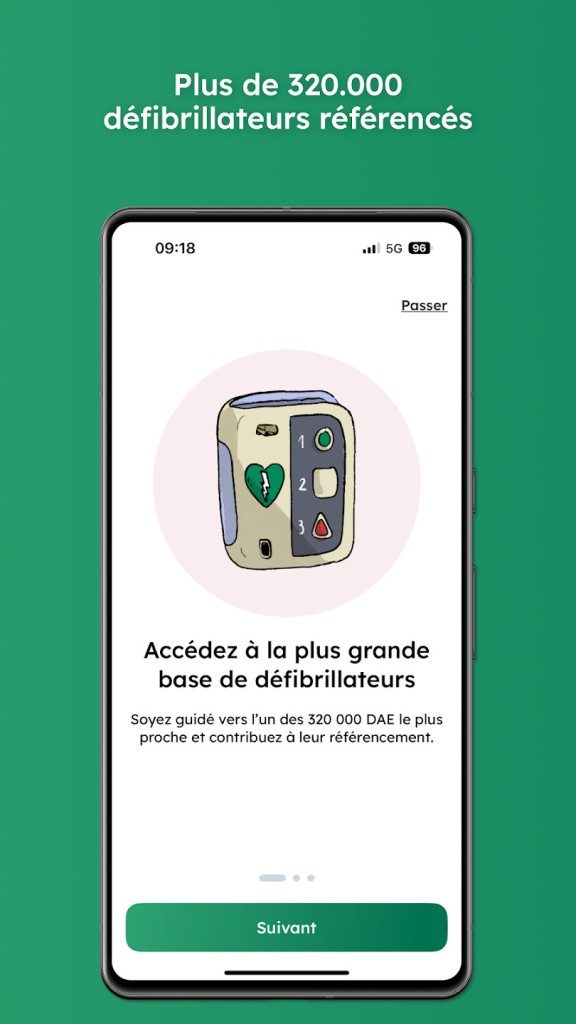
Users can access globally updated AED databases and their accessibility status. The application integrates first aid advice directly into the user interface. The intuitive SOS mode guides users through the steps of resuscitation. This tool democratizes access to important resources. It makes Life Saving Equipment visible and within your reach.
Adoption rates are on the rise. It appeals to individuals, professional environments and associations. The reason is simple. The app is free. It’s safe. It is easy to use. These factors reduce barriers to market entry and promote widespread use.
Download Stay Alive: Compatibility and Installation
Getting an application is easy. You can download it from the official store. It supports two major mobile operating systems: Android and iOS. Android users can find it on the Google Play Store. iPhone and iPad users access it through the App Store. This guarantees wide coverage on mobile devices.
There are no specific versions for Windows, macOS, or Linux. This is intentional. Urgent actions often take place during the trip. Mobile devices are the primary tool for immediate actions. This app prioritizes speed and efficiency over desktop compatibility.
Installation does not require technical expertise. Search for “Download Stay Alive” in the App Store. Follow standard instructions. Once installed, it is ready to use. The user interface guides you through the configuration, especially the geolocation settings. Accurate location information is essential for effective alerting.
Registration is voluntary. Register to join the Good Samaritan community. You become a volunteer. Receive alerts about nearby victims who need immediate help. This turns passive users into active participants in the emergency response network.
Key benefits and safeguards
Completely free access is a big advantage. There is no charge to download or use it. There are no annoying ads to interrupt your experience. This accessibility enables a dense network of users. As the network grows, the response time decreases. This is the basis of the system’s effectiveness.
This app supports international usage. Available in multiple languages. This makes its services available to a wide range of users around the world.
What if I need an older version? Some users may search the app archives for hardware compatibility. It is possible. However, this is not recommended from a digital security point of view. It is safer to use the latest official version. Ensures the latest security patches and features are installed.
Alive’s strength is its ability to turn strangers into a coordinated rescue team.
Apps work best when lots of people use them. Few networks have little value. A dense network creates a safety net. This is why a free model is so important. It removes financial friction. It promotes mass adoption.
Is this a substitute for professional help? No, it complements it. It buys time. During a cardiac arrest, brain damage can begin within minutes. Every minute without defibrillation reduces the chances of survival by 7-10%. Stay Alive helps bridge this gap.
The technology is solid. Implementation is more important. Connections must remain calm under pressure. The information must be accurate. Trust is undermined when an AED is reported to be damaged even though it is functional. The developers actively maintain the database. We rely on user feedback to keep our information up to date.
This creates a feedback loop. As the number of users increases, the accuracy of the data increases. Better data attracts more users. This cycle is self-reinforcing. This is community-oriented security work.
Will it save your life? perhaps. If no one uses it, no one will be saved. That’s the risk. But as adoption increases, the risks decrease. This application is a tool. Its effects vary depending on the person receiving it.
The situation of emergency response is changing. A key element in this transformation is “Staying Alive”. This represents a new approach to dealing with the public health crisis.
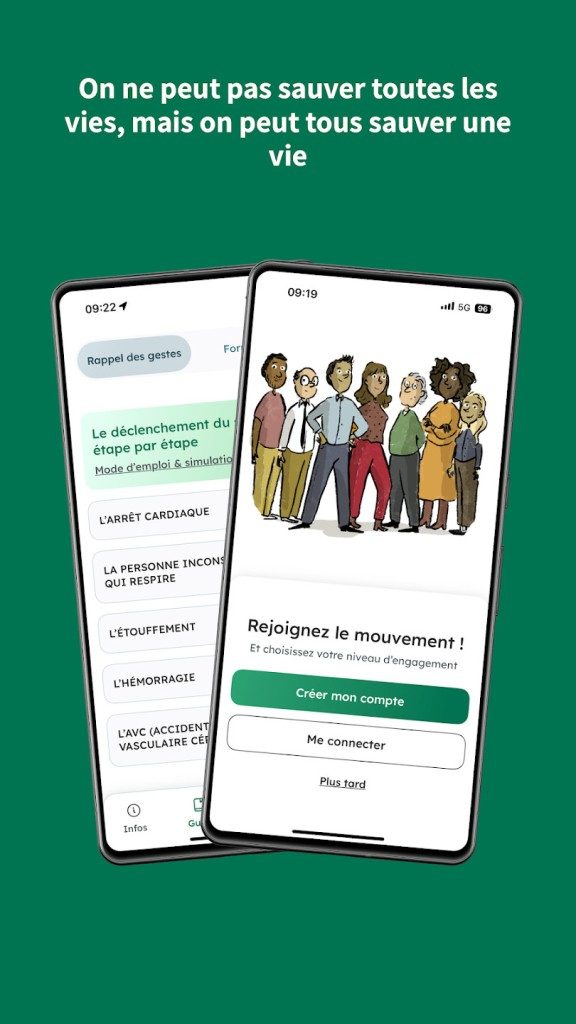
Most emergency apps are simply digital directory listings. It tells you where the defibrillator is on the shelf. Staying Alive does that, but it adds a pulse. The maps are not the only differentiating factor. It’s the people.
This application is based on the “Good Samaritan” model. The app doesn’t just point to equipment when a cardiac arrest is reported. Alerts nearby trained users who may rush to the scene. This real-time mobilization sets us apart from competitors such as Save a Life and generic AED Locator tools. These competitors mainly focus on the hardware placement. Staying Alive focuses on human response time. In a cardiac emergency, seconds matter more than meter measurements.
How Staying Alive can fill knowledge gaps
There’s no point in knowing where the machine is if you don’t know how to use it. This app solves this problem by embedding practical instructions directly into the user interface. You get tutorials on CPR. You get instructions on of an automated external defibrillator (AED). This is not just marketing. This is in accordance with public health guidelines and democratizes first aid skills.
There is a support layer between the municipalities and the administrators of public facilities. You can register their own defibrillators in the app. This enriches the crowdsourced maps. This creates an ever-evolving, community-driven database that gets more detailed as more users contribute. The result? A safety net that strengthens and trained volunteers will strengthen the safety net.
Compatibility and update mechanism
The application is updated regularly, so it is always up to date. Users receive automatic notifications when new versions are released. These updates usually include security fixes and new features. The technical requirements are current, but not restrictive. It supports Android 6.0 and higher. On the Apple side, it requires iOS 12. This covers most of the smartphones currently in circulation. We do not try to support legacy devices. Designed for today’s devices, ensuring performance and reliability when you need it most.
From apps to authentication: deepening user engagement
Staying Alive is more than just software. This is part of a broader movement to increase the public’s first aid literacy. The platform works with certified health structures to push users beyond the screen. It encourages formal training. Think PSC1 (Prevention and Civic Rescue Level 1) certification. or basic life support course. or certain AED handling workshops.
The app gamifies this civic duty. Users can earn badges and special status in the community. These aren’t just digital stickers. These represent verified engagement. They acknowledge the effort it takes to actually learn the skills. This recognition loop reinforces the habit of volunteering and prepare.
The Institutional Shift and future roadmap
Over the years, developers have moved from consumer applications to public health infrastructure tool. They work with local governments and health structures to fill gaps in AED coverage. This active data collection has garnered institutional recognition. This application is not just a utility, but is considered a key node in the emergency response chain.
In the future, the coverage may expand even further. You may receive alerts for other types of emergencies other than cardiac arrest. Integration with official emergency service information systems is being considered. These interfaces enable a smooth exchange between civilian and professional caregivers.
But the basic logic remains the same. More trained citizens mean higher survival rates. This is a virtuous cycle. Every time a new user learns CPR or registers a device, our entire community becomes safer. The app empowers the individual. But it also strengthens collective responsibility. You can download it for free. It is easy to use. But its value lies in the network it builds. This network is only as strong as the people who keep it active.
Mobile-oriented design and technical requirements
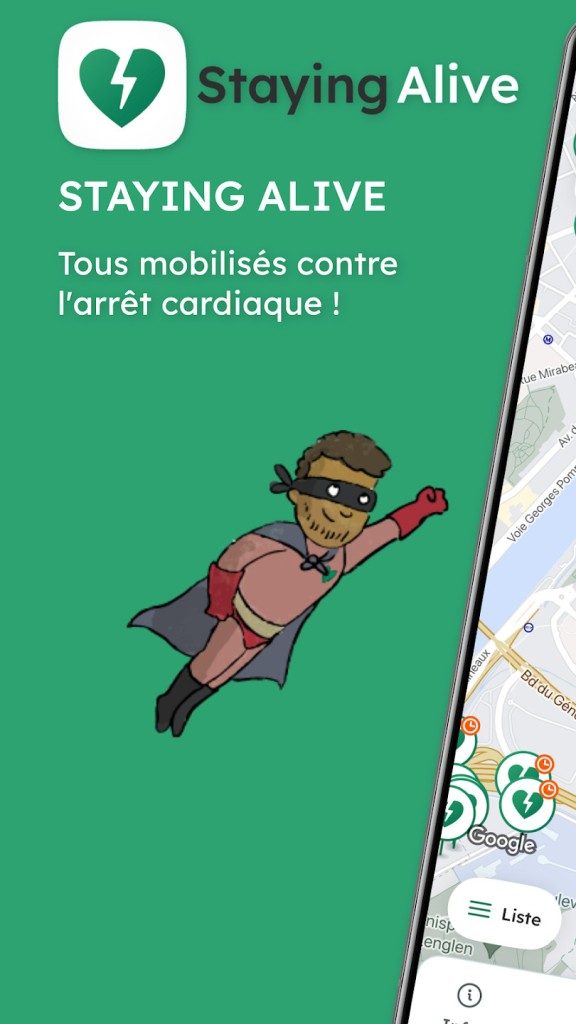
Staying Alive is definitely a mobile ecosystem. There is no desktop version. If you’re looking for a portal to manage defibrillator data or coordinate volunteers, you won’t find it here. This app only works on smartphones and tablets through Google Play Store and Apple App Store. The developers of AEDMAP built it ready to be used in the field.
This mobile-only focus is not a limitation. It’s a core feature. An emergency happens in the presence of people, not at a desk. However, this structure imposes certain technical requirements. You can’t just download it and forget about it. Certain permissions must be granted for the application to work as expected. Two of the most important are GPS location services and push notifications. Without real-time location data, the app cannot alert nearby volunteers. Without the notification, these volunteers would never have received the emergency call.
The app is free. No in-app purchases to block access. Supports Android and iOS devices such as iPhone and iPad. The language interface is multilingual and includes full support for French. The file size will vary depending on your device, but it usually takes up less space. Updates are handled through the official app store, so you always have the latest security protocols and map information.
“Staying Alive is a community first aid app focused on AED mapping and volunteer alerts.”
Usage rights and connection requirements
When it comes to functionality, permission requests are non-negotiable. This app requires access to your device’s network connection, location services, and emergency call features. Why is this all you need? Because thunderstorms don’t give advance warning. If a cardiac arrest occurs, the app should immediately triangulate your location and send an alert to registered volunteers within a specified radius.
The community alarm system requires an active Internet connection to function properly. While some emergency tools may have offline maps, Staying Alive relies on real-time information updates. If you are in a dead zone, your application cannot be accessed by the volunteer network. Similarly, if you are abroad, your local network coverage may limit your performance. The accuracy of the defibrillator’s location is determined by user input and partner information. If the map is older, the nearest AED may be further away than indicated.
Minimum hardware requirements are not clearly documented, but the application requires modern devices with reliable GPS chips. Older smartphones can struggle with the real-time location tracking needed to accurately schedule volunteers. The absence of annoying ads is a big advantage. Keep your user interface clean and reduce cognitive load in stressful moments.
User experience and usage value
Staying Alive is not a simple AED list app. Most directories only have the location. This application activates the human reaction chain. It is targeted at “Good Samaritans”, who are trained volunteers who register on the platform. When SOS is triggered, the application sends a ping service to these users. They can then rush to the scene, uses integrated maps to find the nearest AED, and provides assistance until specialists arrive.
The user interface is designed with stress in mind. Navigation is logical, even if your hands are shaking. The training modules are embedded directly in the application. You will receive CPR and defibrillator instructions without leaving the emergency situation. This integration of instructions and actions enables the application to add tangible value. It does not just tell you where the machine is. It helps organize people and bring them to the victims.
The efficiency of this system is directly related to the population density. In urban areas with good coverage, response times are significantly faster. A network of volunteers creates a safety net that professional EMS services cannot provide. It is less effective in rural areas and areas with a weak volunteer base. Apps are tools, not miracles. To do your best, you need a passionate community.
Limitations and practical use
You need to understand some caveats before trusting this tool. Staying Alive does not replace emergency services. You should still call the official emergency number. The application is a complementary layer, not a replacement layer. If your volunteer network is empty, you only get a map and no immediate help.
The accuracy of the data must also be remembered. Defibrillator position changed. If the device is moved, damaged or installed in a new building. The app relies on user reports and partner updates to maintain this information. If you find a conflict, you can help the whole community by reporting it. In areas with poor connectivity, GPS signals may vary and affect the accuracy of alerts.
The application is free, which facilitates widespread adoption. However, this also means that it lacks strong enterprise support like some commercial health apps. Its sustainability depends on the dedicated efforts of its users and partner organizations. Downloading Staying Alive is a practical option for individuals, organizations and local governments. This provides a systematic way to address community safety. Due to the open nature of volunteer networks, experiences vary. However, in the right context, it offers an attractive combination of simplicity and public utility.
The Cloud Isn’t Magic
We need to stop treating the cloud like a mystical place where data goes to live forever. It’s just someone else’s computer. A very big, very secure, very expensive one. But the abstraction layer matters.
For the average user, the shift to cloud-based workflows means less local storage anxiety but more dependency on uptime. You don’t buy the hard drive anymore. You rent the access. This changes how we handle backups. If your internet cuts out, your “office” is gone until the connection returns.
Syncing vs. Real-Time Collaboration
There is a distinct difference between file syncing and real-time collaboration. File sync is like a courier. It takes a package from Point A to Point B. If you edit a document locally and hit save, that change waits for the sync engine to push it to the server. It’s asynchronous.
Real-time collaboration is different. It’s concurrent. Multiple users edit the same document at the same time. The system resolves conflicts on the fly. This requires more sophisticated backend logic. It’s not just about storing data. It’s about managing state changes across distributed systems.
Why does this matter? Because version control becomes messy. In a sync model, you might have three different copies of a file on three different devices. Which one is the “real” one? Real-time tools force a single source of truth. It’s cleaner. But it’s also more rigid. You can’t work offline as easily.
The Security Trade-off
When you move your data to the cloud, you are trading control for convenience. You no longer manage the firewalls. You don’t patch the server OS. The provider handles that. But you also lose visibility. You trust their encryption standards. You trust their access controls.
This creates a single point of failure. If the provider suffers a breach, your data is exposed. Even if the provider is secure, human error remains. A misconfigured bucket can expose millions of records. It’s not a theoretical risk. It happens regularly.
For individual users, the risk is lower. For businesses, it’s a compliance nightmare. GDPR and other regulations require strict data handling. Moving data across borders adds layers of legal complexity. You need to know where your data resides. Not just the country, but the specific region.
Local vs. Hybrid Models
Not everything should be in the cloud. Some data is too large or too sensitive. Video editing projects, for example. The bandwidth required to upload and download terabytes of footage is often prohibitive. Local storage remains faster for high-throughput tasks.
Many organizations adopt a hybrid model. Hot data lives in the cloud for accessibility. Cold data stays on-premise for security and cost. This requires careful planning. You need tools that can manage both environments seamlessly. It’s not just about buying software. It’s about changing workflows.
The decision isn’t binary. It’s a spectrum. You might keep your email in the cloud but store financial records locally. Or use cloud AI processing for heavy lifting while keeping raw data on-premise. It depends on your threat model. And your budget.
The Cost of Convenience
Cloud services often look cheap at first. The entry-level plan is affordable. But costs scale with usage. Storage, bandwidth, API calls. Add up all the micro-transactions and the bill grows. This is the “bill shock” phenomenon.