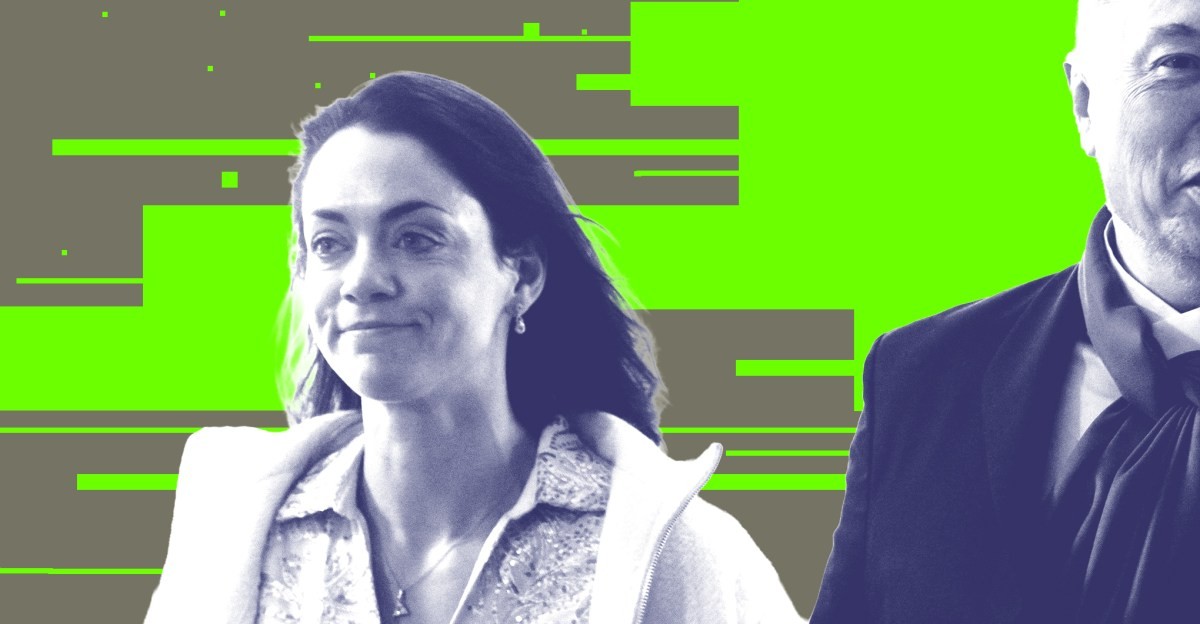
The trial between Elon Musk and Sam Altman has reached a pivotal moment with the testimony of Shivon Zilis, a figure who has long been described as Musk’s closest confidante. However, her appearance in court has inadvertently transformed her from a potential ally into a significant liability for Musk’s legal defense.
Zilis, who is the mother of four of Musk’s children, testified under oath about her extensive involvement in Musk’s business empire, including Tesla, Neuralink, and OpenAI. While she denies holding the title of “chief of staff,” she described working 80 to 100 hours a week to “find bottlenecks and solve them” across Musk’s AI portfolio starting in 2017. Her role was intimate and influential, yet her testimony revealed a pattern of secrecy and allegiance that undermines Musk’s claims of innocence regarding his conduct toward OpenAI.
The Evidence of Secrecy and Conflict
A central point of contention was Zilis’ concealment of her relationship with Musk and the paternity of their children. Zilis admitted that she kept the existence of their twins, born in 2021, a secret from the OpenAI board while she served as a director. It was only after Business Insider reported on court documents listing Musk as the father that the truth came to light.
This secrecy extended to her personal life; Zilis testified that she did not even tell her own father about the children’s paternity until after the news broke. She claimed that her relationship with Musk was initially “platonic” and that she had conceived children via IVF, a statement that contradicted her later admission of a romantic relationship. This inconsistency has raised serious questions about her credibility and the reliability of her account of events.
Key Insight: The concealment of such significant personal and professional conflicts suggests a deliberate effort to manage information flow, casting doubt on the transparency of Musk’s interactions with OpenAI.
Critical Meeting Notes Undermine Musk’s Defense
Perhaps the most damaging evidence presented by Zilis was not her spoken testimony, but the detailed meeting notes she kept during critical discussions in 2017 and 2018. These notes, which Zilis described as part of her job to “aid and facilitate communication,” provide a window into the early strategic decisions regarding OpenAI’s structure.
The notes reveal that Zilis was present when co-founders Sam Altman, Greg Brockman, and Ilya Sutskever discussed the possibility of creating a for-profit arm of OpenAI. Crucially, her records show that the founders were adamant about preventing Musk from having absolute control over the artificial general intelligence (AGI) they were developing. One email from Zilis noted that an “ironclad agreement” to prevent Musk from having control was a “complete non-negotiable” for the founding team.
Furthermore, Zilis’ emails document Musk’s strategic maneuvers during this period:
- Funding Leverage: Zilis warned in August 2017 that Musk had frozen a $5 million donation, noting it would have a “big psychological impact” on the team. Musk confirmed this halt to funding in September.
- Board Control Attempts: There were discussions about placing Zilis, Sam Teller, and Jared Birchall on the OpenAI board to ensure Musk’s influence.
- Talent Poaching: Musk actively sought to recruit top talent from OpenAI to Tesla, including offering Sam Altman a board seat at Tesla to potentially subsume OpenAI’s efforts.
These documents contradict Musk’s narrative that he was a passive observer or that his intentions were purely charitable. Instead, they paint a picture of a founder actively working to maintain control and leverage his position for strategic advantage.
Allegiance and Credibility
During cross-examination, Zilis faced scrutiny over her changing recollections. At times, she appeared to “recover” memories that aligned with Musk’s defense, a phenomenon that attorneys noted with skepticism. For instance, she initially forgot a key conversation with Sam Altman regarding her resignation from the OpenAI board due to Musk’s competing ventures, only to recall it later.
Her texts and emails further illustrate her primary allegiance. In one message, she referred to Musk’s competitive efforts as “E’s effort,” and in another, she noted that when the “father of your babies starts a competitive effort,” resignation is the only option. This language underscores her personal and professional devotion to Musk, suggesting that her actions were guided by loyalty to him rather than impartial duty to OpenAI.
Conclusion: Shivon Zilis’ testimony has inadvertently strengthened OpenAI’s case by revealing the extent of Musk’s involvement and control. Her detailed notes and contradictory statements highlight a pattern of strategic manipulation and secrecy, challenging Musk’s portrayal of himself as a benevolent benefactor. The trial now hinges on whether the court will view these actions as legitimate business strategy or a breach of fiduciary duty.