Carriers hype up the Super Bowl. Every year, the big three announce fresh upgrades to keep the Big Game online. It’s the annual promise of high-speed networks amidst a sea of smartphone users. But promises crack. Fans always complain. They want to post the glory. The network bottlenecks. Silence ensues.
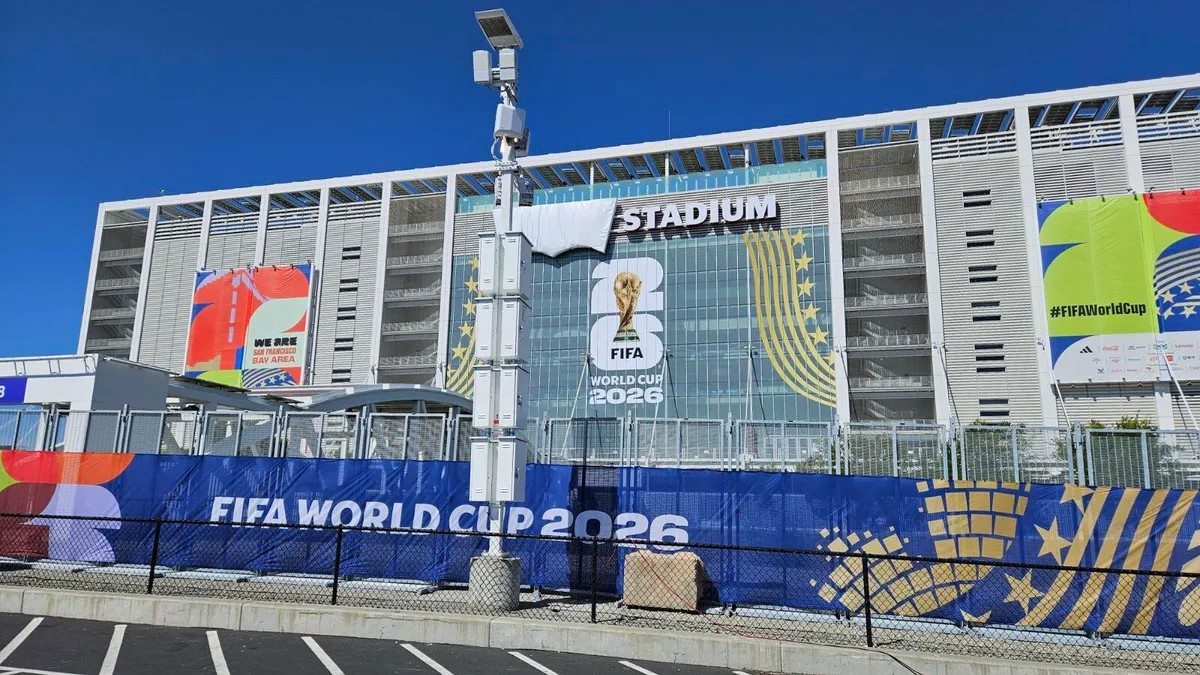
Now, the pressure test has moved from American football to the global game of soccer. Four months after Santa Clara hosted the NFL championship, the same stadium shed its Levi’s logo. It became home for FIFA. By June 25, nearly 69,00 fans were packed in for Paraguay vs. Australia. This was the fifth match in two weeks for the venue.
The viewership dwarfs the NFL. Millions watch at home. Thousands fly in. Then comes the moment. A goal. An anthem. Every person in that arena grabs their phone.
This World Cup spans three countries. The US, Mexico, Canada. There are eleven stadiums in the United States alone. If one fails, the frustration spreads. So, I went in. I didn’t just watch. I stress-tested the network. I wanted to see if a video call actually works when you are surrounded by 68,000 other people doing the exact same thing.
The Equipment and The Test
The setup wasn’t casual. We needed hardware that could tell a story.
I used three distinct setups to compare carrier performance under load:
* Samsung Galaxy S23+ on Verizon
* Motorola Razr (Mint Mobile, using T-Mobile network)
* iPhone 17 Pro Max on AT&T Turbo Live
There were 68,82 people inside. Between just three of us, we carried six devices. The density of devices per square inch was astronomical.
Photos first.
Sending images to colleagues off-site via RCS and WhatsApp was effortless. Photos crossed from Verizon to T-Mobile to AT&T in seconds. Video took slightly longer. A 23-second clip took under a minute to upload. Nothing broke. The social feed stayed alive.
The network didn’t buckle under the photo barrage. It handled it with surprising grace.
The real test was voice. And not just voice. Video calls to people who didn’t get tickets. Why? Because FIFA’s ticketing system is a lottery of misery, followed by a predatory resale market. Tickets cost a fortune. People miss out. They need to see what they’re missing.
I made calls to Sydney, Los Angeles, Germany, and Melbourne.
The Sydney call, made right before kickoff, was crystal clear. The German call, mid-play, held strong. The Melbourne call at the final whistle worked flawlessly. The Los Angeles call failed. But not because of the stadium. LA traffic had killed the recipient’s signal. A technical nuance, but it proved the stadium output was clean.
What about speed?
AT&T’s new Turbo Live feature is the standout data point here. It’s a pay-for-priority lane. On my iPhone 17, hitting Turbo Live yielded 1,690 Mbps download and 92.4 Mbps upload. Compare that to my Verizon connection at roughly 714 Mbps. The difference is staggering.
Then there was the T-Mobile MVNO result. Mint Mobile clocked a dismal 3.77 Mbps. It’s slow. Glacial, almost.
Is AT&T Turbo Live Worth the Headache?
It is fast. Undeniably so. But getting there is a friction-heavy ordeal.
Setting up Turbo Live took ten minutes. Ten. You have to:
1. Find the event on the Turbo Live site.
2. Check phone eligibility.
3. Pay the fee (about $12 for this match).
4. Activate an eSIM.
5. Change default line settings in your OS.
6. Select the eSIM as the primary network.
Who does that in real-time during a game? Nobody. You pay for convenience, but you must do the work before you get there. Events listed weeks out are fair game. Plan ahead. Or get left behind on the slower lanes.
How Carriers Are Patching the Holes
So how did the carriers prevent a total collapse? They didn’t leave it to chance. Each one took a different engineering approach.
Verizon: Brute Force Hardware
Verizon is the official sponsor. They went big on physical infrastructure. They installed thousands of antennas under the seats. Not just nearby. Underneath. They also deployed giant ball-shaped antennas for the nosebleeds.
Abraham Arencibia, Verizon’s VP of tech, noted they expect 50 terabytes per game.
“That’s equivalent to streaming every movie on Netflix simultaneously over 90 minutes,” he said. To handle that, they tripled to quintupled capacity in host stadiums. They even laid 80,000 milesof fiber to get broadcast feeds out.
AT&T: The Priority Lane
AT&T focused on software differentiation. Turbo Live. But beneath the surface, they rely on FirstNet. This is the First Responder Network, a joint federal-AT&T entity. FirstNet doesn’t deprioritize during congestion. It simply doesn’t slow down. FirstNet teams are on the ground for every match. If the commercial network clogs, emergency channels remain open. This priority architecture allows them to slice bandwidth for paying customers who buy into Turbo Live, ensuring stability for both public safety and high-paying users.
T-Mobile: AI Optimization
T-Mobile bets on brains over bulk. They use T-Mobile Dynamic CX, an AI system. It watches crowd movement. As fans shift toward restrooms or exits, the network reallocates capacity in near-real time. They reported 99% accessibility during matches in Seattle. No hardware overhaul. Just smart code adjusting to the chaos.
The Practical Reality for Fans
The theory worked. But what does that mean for you sitting in the plastic chair?
Bring a power bank. Testing video calls drains battery. Fast.
Stop relying on stadium Wi-Fi. It is a relic. The cellular data on 5G networks, particularly the boosted ones mentioned above, will outperform it.
If you are on AT&T, or if your phone supports eSIMs and you can use another carrier’s SIM slot, look into Turbo Live. Do the setup before you leave your house. It costs extra. But that speed bump? It matters.
We often assume stadiums are digital dead zones. Not anymore. The networks are strained, yes. They are engineered for war zones, not just leisure. But the gap between carriers is widening. Verizon provides the broad coverage. AT&T offers the premium express lane. T-Mobile tries to automate the flow.
Does it work? Yes. But it’s not equal. Your carrier matters more now than it ever has.