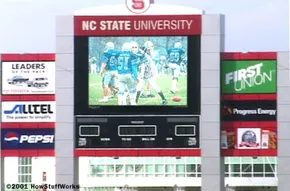
If you’ve ever sat in the nosebleed seats of a crowded stadium, you know the struggle. The action is happening ten feet away from the quarterback, but your view is blocked by a sea of heads. Then, the massive video board lights up. It’s not just a big TV. It’s a 30-foot-tall wall of light that brings the game down to your level.
You see these things everywhere now. Race tracks. Concerts. Times Square. They show instant replays, player stats, and close-ups that a regular screen just can’t match. But how do you build a display that is 60 feet high without it looking like a pixelated mess from the back row?
It’s not magic. It’s LED technology. And it’s far more complex than plugging a monitor into a wall.
Decoding the Signal
The first hurdle isn’t the screen itself. It’s getting the image there.
A standard HD signal is tiny compared to what these walls need. To fill a 20-meter tall display, you aren’t just stretching a 1080p image. You’re dealing with gigapixels. The system takes multiple camera feeds and graphics engines and stitches them into a massive digital canvas.
This isn’t like watching Netflix. The latency has to be near zero. If the replay lags by even a second, the magic breaks. The crowd sees the goal before the screen shows it. That kills the experience. So, the signal chain is optimized for speed. Raw video data gets compressed, processed, and sent out to the screen controllers in milliseconds.
The resolution varies. Some older installations might run at 4K across the whole board. Newer ones? They use high-pitch LED technology to pack more pixels into every square foot. This allows viewers in the front row to see detail, while those in the back still see a coherent image.
The Hardware Behind the Glow
So, how do you make a TV that big? You don’t buy one. You build it.
Think of it as a mosaic. The giant screen is actually thousands of smaller modules. Each module is a box containing dozens of LED panels. These panels are modular by design. If one row burns out, you swap it out. You don’t replace the whole wall.
The LEDs themselves are microscopic. They are grouped into RGB triads—red, green, and blue diodes. By varying the intensity of each color, you create millions of shades. The key here is pixel pitch.
Pixel pitch is the distance between the centers of two adjacent pixels. Measured in millimeters, a smaller number means higher resolution.
– A pitch of 10mm looks fine from 50 feet away.
– A pitch of 2.5mm can be viewed from just a few feet away.
Stadiums often use a hybrid approach. The center of the board, where fans are closest, gets a tighter pitch (smaller pixels). The outer edges and top tiers use a coarser pitch because no one is standing there squinting. This saves money without ruining the view.
Why It Matters to You
You might think this is just for the whales in the luxury boxes. You’d be wrong.
These displays change how we consume sports. They turn passive viewing into active engagement.

Scaling up a television screen to sixty feet does not change the fundamental physics. A massive display still has to perform the same basic task as your bedroom set: take a video signal and convert it into points of light. If you already understand how a standard cathode ray tube (CRT) works, the logic transfers directly to the behemoths.
The core mechanism remains stubbornly simple. An electron beam sweeps across a phosphor-coated screen. It energizes tiny dots. Those dots glow. We see light.
But the timing? That is where the precision lives.
The Anatomy of a Video Signal
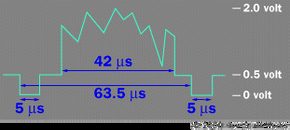
You cannot just blast electrons at random. The video signal acts as a conductor, dictating intensity line by line. Look at the waveform. It is not just noise. It is a structured command.
The process begins with a specific signal.
- The Horizontal Retrace Signal : A five-microsecond pulse at zero volts. This is the “back porch” of the signal. It tells the electron beam to shut off and reset.
- The Sweep : Once reset, the beam zips from left to right. It takes exactly 42 microseconds to cross the screen.
- Intensity Modulation : As the beam travels, the voltage varies. High voltage equals bright light. Low voltage equals darkness. The signal paints the image in real-time.
Vertical Sync and the Cycle
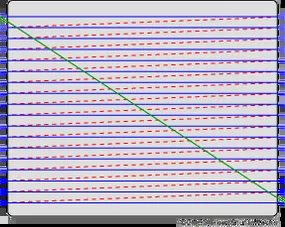
This horizontal sweep repeats. Thousands of times per second. The beam moves down the face of the CRT, row by row.
When it hits the bottom, it receives a vertical retrace signal. This is the hard stop. It forces the beam back to the upper-right corner. The cycle restarts.
“The initial five-microsecond pulse at zero volts (the horizontal retrace signal) tells the electron beam that it is time to start a new line.”
This timing is non-negotiable. Miss the window. The image tears. Or worse, it collapses into a single bright line.
Why This Matters for Big Screens
You might wonder why we still discuss CRT mechanics for modern, giant displays. It is not about nostalgia. It is about understanding signal integrity.
Even in digital systems, the concept of “blanking” and “retrace” persists. Modern projectors and LEDs still need to know when to turn off during a transition. The ghost of the electron beam lingers in every pixel clock.
If you are trying to fix a jittery image on a large-scale display, looking at the sync pulses is your first step. Not the resolution. The timing.
Does the size change the physics? No. It just makes the failure modes more expensive to fix.
Think about the beam. It is moving at incredible speeds. Microseconds matter. A drift of a few microseconds and your sixty-foot screen ripples. The image dissolves into static.
It is not magic. It is just faster, bigger, and more expensive physics.

The Brightness Barrier
A color screen does the same mechanical trick, but it splits the work. Three separate electron beams fire simultaneously. Each beam targets a specific dot of phosphor—red, green, or blue—for every single pixel. A separate signal dictates the color intensity as those beams sweep across the display. The hardware is complex. The physics are simple.
As those beams race across the glass, they bombard the phosphor coating. The impact excites the phosphor dots. They glow. The screen lights up. The TV paints 480 lines of data at 30 frames per second. Your brain smooths the gaps. It blends the flicker into a moving image. It works. It has always worked.
But there is a hard limit. This technology thrives indoors. Put a CRT TV in direct sunlight and it vanishes. The phosphor is simply not bright enough to fight the sun. You get a black mirror. A reflection. Nothing more. There is also a physical ceiling on size. You rarely see them go beyond 36 inches. The glass gets too heavy. The engineering gets too risky. You need a different approach for outdoor screens. You need something that screams, not whispers.
Jumbo Screens
Outdoor environments demand a different kind of light. They require panels that can compete with ambient illumination. This shifts the focus away from the vacuum tube entirely. The market moves toward technologies that handle intensity. LED matrices. Micro-LEDs. These aren’t just bigger TVs. They are structural components. They define the visual landscape of public spaces.
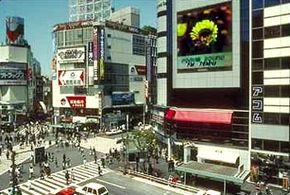

The gap between the massive display hanging over a stadium and the flat panel on your living room wall comes down to two brutal physical realities. First, scale. We are talking about screens that might tower 60 feet into the air, compared to the 18-inch height of a standard home set. Second, brightness. These aren’t just bright; they are blindingly so, engineered to remain visible when the sun is beating down on the crowd below.
To pull off both feats, manufacturers rely on light emitting diodes (LEDs).
Think of an LED as a tiny, efficient light bulb. They are small. They punch out intense light. And they sip power relative to the luminance they generate. You already see this technology everywhere outside your front door. Traffic lights. Brake lights. The glow of your device’s indicator. It is reliable, durable, and incredibly bright.
Traditional color CRT televisions, those bulky box sets of the past, worked on a different principle entirely. They used phosphor dots for every pixel, mixing red, green, and blue to create color. That method doesn’t scale. It doesn’t shine in direct sunlight. And it certainly doesn’t cover a football field.
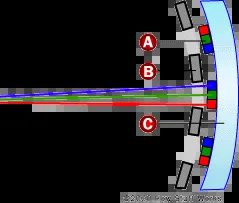



Big screens don’t use phosphors anymore. That’s the first shift. Instead, they rely on direct red, green, and blue LEDs. You are looking at the source color, not a backlight filtering through layers.
A single “pixel” isn’t a tiny dot like on your phone. It is a module. A physical cluster.
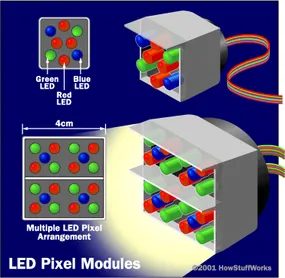
In smaller setups, you might see just three or four LEDs per module. One red. One green. One blue. That’s it. Bare bones.
But scale that up. Look at a stadium jumbotron or a massive concert backdrop. The modules grow. Each one packs dozens of individual LEDs. The density changes. The resolution logic shifts.
Size Matters
How big is a pixel on a giant screen? It depends on the distance.
Typical pixel modules range from 4 mm to 4 cm. That is 0.2 inches to 1.5 inches.
Think about that gap. On a phone, pixels are invisible to the naked eye. Here? You can walk right up to a 4 cm pixel and see it. It’s a physical object. A small square of circuitry and light.
This size difference defines the viewing experience. You don’t sit six inches from a jumbo TV. You stand further back. The tech accounts for that.
Why LEDs Instead of Phosphors?
Phosphors glow when hit by UV light. They are inefficient. They heat up. They fade.
LEDs are direct. They convert electricity to light almost instantly. No intermediate step. This means:
- Higher brightness
- Better color accuracy
- Longer lifespan
- Less heat waste
For a screen that runs 24/7 in a stadium or a corporate lobby, those advantages are everything. Downtime costs money. Faded colors look cheap.
The Trade-off
Direct LED means you see the pixels. Especially in bright daylight.
But you also get contrast that plasma and LCD can’t touch. Pure blacks. Because the LEDs just turn off. No light bleeds through.
The industry is pushing modules smaller. 2 mm. 1 mm. Closer to the phone experience but scaled for giants.
We are moving toward a world where every screen is a direct LED matrix. Smaller pixels. Tighter spacing. Higher density.
The gap between a phone and a wall is closing. Slowly.

Think of a massive LED display like a mosaic made of light. To construct a screen that dominates a skyline, engineers take thousands of individual LED modules and arrange them in a precise rectangular grid. A standard configuration might involve a grid of 640 by 480 modules. Do the math, and you are looking at 307,200 distinct light sources. The physical dimensions of that ultimate screen are directly tied to the size of the individual modules used to build it.
Sizing the Display
The choice of module size dictates whether you get a wall that fits in a lobby or a façade that wraps around a skyscraper.
- 4 mm module size : Creates a screen measuring 2.56 x 1.92 meters (roughly 8.4 x 6.3 feet).
- 25 mm module size : Spans 16 x 12 meters (about 52.5 x 39.4 feet).
- 40 mm module size : Results in a monstrous 25.6 x 19.2 meters (84 x 63 feet).
The Invisible Infrastructure
Building the visual part is only half the battle. Keeping a structure like this alive requires a complex triad of computing power, electrical distribution, and wiring.
The Computer System
The brain of the operation is the control computer. It takes the incoming TV signal and makes split-second decisions on which LEDs to activate and at what intensity. The system samples the incoming color and intensity data, then translates that information into specific brightness levels for the red, green, and blue components of each pixel module. Without this translation layer, you just have a grid of lights, not an image.
The Power Grid
Then there is the sheer energy demand. The power system feeds every module and modulates that electricity to ensure every LED hits the correct brightness level. You might not expect it, but lighting up hundreds of thousands of diodes is expensive. A typical 20-meter jumbo TV can draw up to 1.2 watts per pixel. For a full display, that adds up to approximately 300,000 watts. That is not a small bill.
The Wiring
Because each module needs individual attention for both data and power, dozens of wires run to every single module. Behind the sleek surface of the screen lies a dense web of cabling, connecting the infrastructure to the pixels you see.
Market Expansion
As the cost of LED technology has plummeted, these screens have escaped the realm of stadium-only installations. They are now ubiquitous. You will find them indoors, lining the walls of shopping malls and corporate lobbies. Outdoors, they thrive in tourist-heavy zones where high visibility justifies the installation cost. The barrier to entry has lowered, meaning the technology is everywhere, even if you don’t always notice how it works.
Frequently Answered Questions
What are the big screens at concerts called?
Those massive displays are commonly referred to as jumbotrons or sometimes jumbovisions.