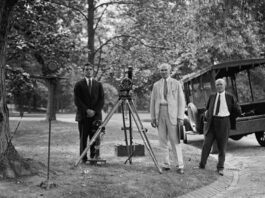
Édouard Belin was not just an engineer; he was the guy who figured out how to send images across wires before anyone really thought it was possible. Born in Vesoul, France, on March 5, 1876, he spent his life pushing the boundaries of what could be transmitted electrically. His career ended nearly a century later, on March 4, 1963, in Territet, Switzerland. But the real story is what he did in between.
In 1907, Belin achieved something that felt like magic at the time. He created the first telephoto transmission. This wasn’t a quick test. He sent images from Paris to Lyon, then on to Bordeaux, and finally back to Paris. All of it using an apparatus he invented himself. It proved that visual data could travel just as fast as voice or text.
The technology didn’t stay local for long. By 1921, the reach of his equipment expanded dramatically. The first transatlantic transmission took place that year. It connected Annapolis, Maryland, in the United States with Belin’s laboratories at La Malmaison in France. Crossing an ocean with pictures was a massive leap.
Britain adopted his equipment in 1928. This wasn’t a niche adoption. It became a standard. Throughout the 1930s and ’40s, the device was used almost exclusively by European news media. Journalists needed to get photos from the front lines faster than physical mail could carry them. Belin’s machine provided that speed.
The influence of his work was so pervasive that a new term entered the lexicon. “Belino” became the generic word for all kinds of picture transmission. People didn’t say “scanned image sent via phototelegraph.” They said “Belino.” It’s a testament to how dominant his invention was during those decades.
Why does this matter now? Because it laid the groundwork for the visual internet we take for granted. Before we could snap a photo and email it instantly, we had to wait for wires to carry light across continents. Belin solved the core problem: how to break an image down into electrical signals, send them, and reconstruct them on the other side.
He died in 1963. The world had moved on to satellite imaging and digital photography. But the basic principle remained. Send the data. Rebuild the picture. It’s a simple loop. We still use it every time we view a meme or a news photo. The name Belin faded, but the function stayed.