The goal is simple. Less phone time. Better mental health. But I’m a wellness writer. My job is to watch health tech. I live for the latest trends. It’s a conflict of interest. I know the screens are bad. I still look at them. The built-in Screen Time limits on my iPhone? Useless. I can bypass them in seconds. Three taps and I’m back in the digital void.
You are probably like that. Over a billion people spent at least three hours a day on social media in 2021. The pandemic didn’t just change our work habits. It broke our brains. We got used to scrolling. We forgot how to stop. Most of us are still stuck in those bad digital hygiene patterns.
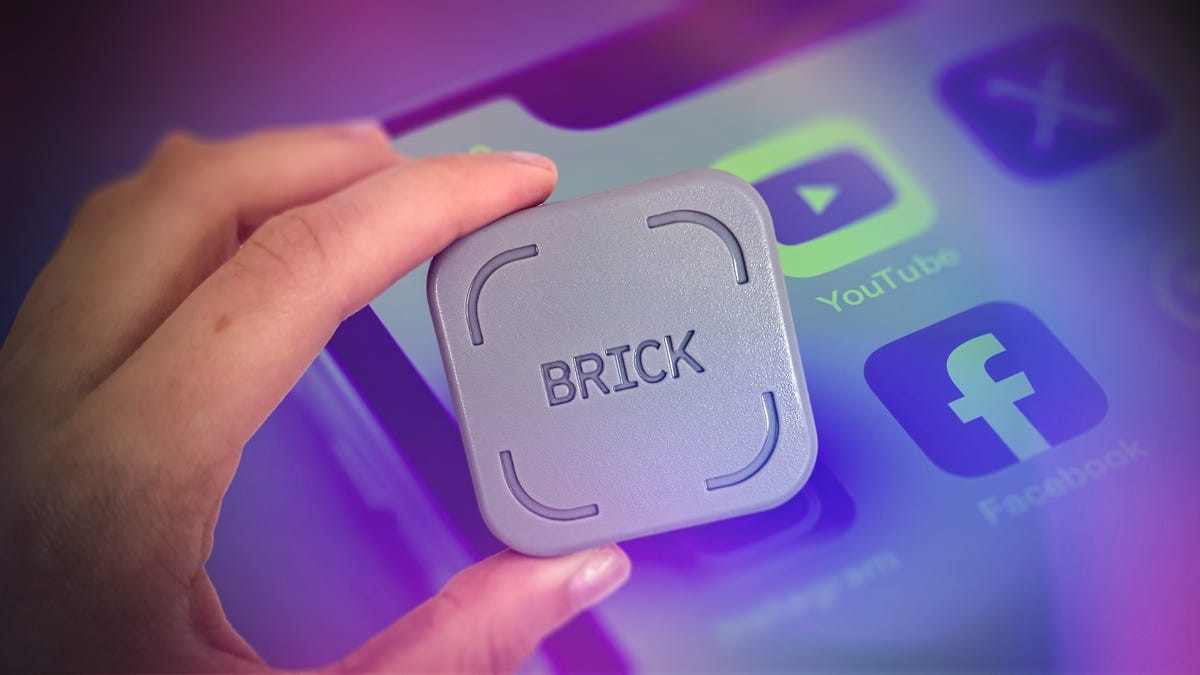
Then there’s the Brick. It’s been around since 2023. A small gray square. A $60 magnet. It uses NFC. Near-field communication. No battery needed.
TJ Driver, co-founder, explains the trick to CNET. He says the device draws power directly from your phone when you tap it. That’s the key. You don’t tap a button on a screen. You touch a physical object.
“Instead of relying on batteries… it draws power directly from your smartphone… putting real friction between you and your screen time.”
Real friction. You have to physically engage. You can’t ignore an alert. You can’t dismiss a popup with a lazy swipe. You have to stand up. Walk to the fridge. Touch the square. That’s a lot of effort. Just enough to make you pause.
How the hardware actually works
You buy the Brick. You get the hardware. You get the app. No subscription fees. That’s important. Inside the box is a QR code. Scan it. Download the app for iOS or Android.
Setup varies. Apple is strict. iPhone needs a passcode initially. Android gives more freedom but wants permission for notifications and alarms. One Brick can talk to multiple phones. One phone can talk to multiple Bricks. Put one at home. One at the office. Keep the separation real.
The data stays local. On your phone. The Brick itself is dumb. It can’t see what you’re blocking. It just opens the lock. Or closes it.
Modes and schedules
Once you log in, the app asks for permission to read your screen time stats. Then you build a mode. Name it. Choose what to block.
You can have up to 10 modes. Work mode. Study mode. Dinner with family. Personal chaos. The settings are customizable. You can set a schedule. The block starts automatically. Or you trigger it manually by tapping your phone on the Brick.
Holding the button for five seconds locks you in. There is no “undo” button in the air. You must go to the Brick. To unbrick.
Emergency exits exist
The app shows your history. You can adjust settings. But pay attention. You get five emergency unbricks.
Just five.
Use them wisely.
“Access to five ’emergency unbricks’… yes, you only get five.”
In strict mode, the app stops you from deleting itself to escape the block. It blocks new app installs. It stops in-app purchases. It filters mature content. There’s even a live timer at the top of the screen. So you always know when your session ends.
The Brick sticks to metal. It has a silicone bottom for flat surfaces. It’s hard to move. Which is the point.
My test
I put the Brick on the fridge. Not next to my couch. Not within reach. Far enough that I had to think. I tend to scroll while sitting down. To use the phone, I had to get up. Walk past the kitchen. Touch the magnet.
I created “Mindful Mode.” It blocks TikTok. Instagram. YouTube. The big three time-vamps.
It feels different. Screen Time limits are internal. They live in the phone’s operating system. They feel like rules I can break. The Brick is external. It’s in the world. When I’m blocked, I look around.
What else is there?
I read on the balcony. I birdwatch. I walk. I talk to people. It turns FOMO into NO-MO. Fear Of Missing Out becomes No MOre scrolling.
The numbers don’t lie
My longest session: 6 hours, 45 minutes. My total time with the brick on my phone: 35 hours. That number feels heavy. It feels like progress.
The data says I’m spending less time. My intuition says I’m more present. Social media is engineered to hook you. It uses psychology against you. The Brick breaks that loop. It’s a physical interruption. A reminder that your device isn’t your master.
Is it worth the cost?
$59 for the unit. Plus shipping. It varies by location. It’s HSA/FSA eligible. If your insurance covers mental wellness, maybe it covers this. There’s a 30-day guarantee.
They sell a mount for $12. Adhesive backing. It sticks the Brick to a wall. I wouldn’t pay extra for that. I prefer the fridge magnet vibe. Simple. Effective.
Competitors exist. Bloom Card is $39. Blok Card is $49. Neither is magnetic. They fit in your wallet. They rely on different tech. Unpluq Tag is $27. But it requires a subscription. $35 every six months. That adds up.
You could DIY it. Buy 50 NFC tags for $13. Print a QR code. Use the free app Foqos. It works. But the hardware integration of the Brick feels more polished. It’s intentional.
The unexpected result
The design is thoughtful. It’s not sleek. It’s a gray square. It doesn’t try to be pretty. It tries to be useful. It reminds me that disconnecting sometimes requires moving my body. Not just my thumb.
But here is the strange part.
I still use the Brick. I still love the routine. But I’ve started scrolling less without it. I haven’t used it every day for weeks. The spell is broken. The habit shifted.
All it took was a piece of plastic and metal on my refrigerator. A tiny barrier between me and the infinite feed.
I don’t miss the doomscrolling. Not really.
Who would have guessed?