Radio hasn’t evolved much in eighty years. The last real revolution happened when Frequency Modulation (FM) took over in the 1960s and 70s. Now HD Radio is trying to break that stagnation. It promises better sound. It offers more stations in the same bandwidth. It beams extra data directly to your device.
It’s not a guaranteed win, though. Critics are skeptical. Adoption is slow. But the technology exists.
What “HD” Actually Means
Most people hear “HD” and think High Definition. Like television. That’s wrong. The “HD” in HD Radio doesn’t stand for High Definition.
Some argue it means “Hybrid Digital.” The company behind it, iBiquity, says it’s just a brand name. It doesn’t stand for anything. It’s a trademark.
Don’t worry about your current stereo. HD Radio won’t kill traditional broadcasting. Stations will broadcast both analog and digital signals. If you don’t care about the extra features, your old receiver keeps working. You just won’t get the upgrade. You need a specific receiver to decode the digital side.
Why Sound Quality Improves
Standard FM frequencies have limits. They can’t carry enough data for CD-quality audio. Amplitude Modulation (AM) is worse. It carries so little info that stations broadcast in mono. Stereo is impossible for most AM signals.
HD Radio fixes this by digitizing the signal. It compresses the audio like an MP3 compresses a WAV file. This compression allows FM stations to broadcast near-CD quality. AM stations finally get clarity that matches modern FM.
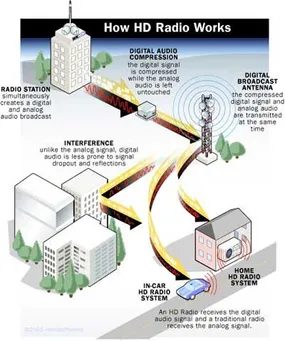
The receiver locks onto the digital transmission. It ignores interference. It stops reflections off buildings. The result is clean sound. No static. No pops. No hiss.
“Digitizing allows FM stations to broadcast with near-CD quality sound.”
But hardware matters. You can’t hear what you can’t decode. The receiver must be able to interpret the HD Radio format. Without it, you’re stuck with the analog noise of the past.
Is it worth the switch? Maybe. The tech is there. The quality is better. But adoption remains the hurdle. Stations have to support it. Listeners have to buy the gear. Until then, it’s an option, not a replacement.
The future of radio isn’t dead. It’s just getting complicated.

It’s a terminology trap that trips up everyone from engineers to casual listeners. HD Radio uses multicasting to describe its ability to push multiple channels over a single frequency. Technically, that’s wrong. Internet multicasting is a specific routing architecture for sending data to multiple destinations simultaneously. What HD Radio actually does is multiplexing — combining several data streams into one signal.
iBiquity, the company behind the tech, stuck with “multicasting” anyway. Probably for marketing simplicity. But the distinction matters if you care about how the signal actually works.
The Extra Bandwidth Trick
The magic here is the extra bandwidth buried in the HD signal. It’s not just a cleaner version of the main station. It’s room for completely separate content.
Think about 102.5 FM. You tune in. You get classic rock. That’s the main channel. But your receiver sees the multicasting tag. You dial over. Suddenly, you’re listening to a dedicated blues channel. Or maybe the same frequency splits its attention between a live sports talk show and a political commentary segment.
These aren’t reruns. They’re simultaneous broadcasts. Different audio streams, same carrier wave.
How Many Channels Can You Fit?
Current HD technology has hard limits. You aren’t just adding endless channels for free.
- Music stations can add one extra channel.
- Talk stations can add up to three extra channels.
Cross that threshold, and the sound quality degrades. The signal gets noisier. The data compression kicks in harder. It’s a trade-off between variety and fidelity.
These extra streams are labeled as HD2 stations (and HD3, HD4, etc.). They sit alongside the main analog broadcast.
What Happens When the Signal Drops?
Digital signals are fragile. Walls, weather, and distance kill them.
If your receiver loses the digital lock, it doesn’t static out. It doesn’t cut to dead air. It seamlessly fades back to the analog FM signal. You might lose the high-fidelity audio or the extra channels, but the station stays on. The transition is designed to be invisible to the listener.
Data on Display
The signal carries more than just audio. It pushes text data along with the sound.
Your receiver can pull this info and display it on the screen. We’re talking:
– Artist and song titles
– Real-time sports scores
– Weather updates
– Stock market ticks
It’s metadata from the 90s, repackaged for the 2000s. But it works.
Analog Isn’t Dead Yet
No major station is planning to flip the switch to all-digital. Not yet. Maybe not ever.
They will keep broadcasting analog FM and AM signals alongside the HD data. Old radios won’t be obsolete overnight. They’ll keep picking up the standard signal while new receivers unlock the extra layers.
It’s a hybrid system. A bridge between the old broadcast era and a more complex, data-rich future. Whether that future arrives depends on listeners buying the hardware and stations investing in the infrastructure.
Thanks to Daniel Guzman for his assistance with this article.

Why AM and FM Can’t Do It All
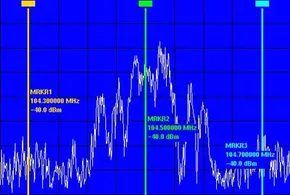
Analog radio is trapped by physics. The waves themselves and the rigid spacing between stations create a hard cap on data. FM stations sit 200 kHz apart. AM gets a tighter squeeze with only 10 kHz. Even when FM stations use alternate spacing, they’re fighting for 400 kHz of real estate. Inside that slice, signals split into Upper and Lower Sidebands (USB and LSB).
This spacing gives FM enough room for stereo audio. It’s better than AM. It’s not enough for true CD-quality sound. You could technically pack more data into an FM signal, but the bandwidth cost would force stations off the dial. Fewer stations. Worse for listeners.
The HD Radio Solution
HD Radio changes the math. It compresses digital data so more information fits into the same radio bandwidth. Early versions used PAC (Perceptual Audio Coding). It failed. Listeners complained about the poor sound quality. In 2003, iBiquity switched to HDC (High-Definition Coding).
The result? Higher fidelity. But let’s be clear.
“Although HD Radio is touted as providing CD-quality sound on the FM airwaves, the compression of the digital signal is a ‘lossy’ method.”
That means data gets thrown away. The compression discards parts of the original signal. Fidelity drops. You lose information that might not matter to human ears, but technically, the broadcast is not identical to the source CD. It’s close. It’s not the same.
How HD Radio Fits on the Dial
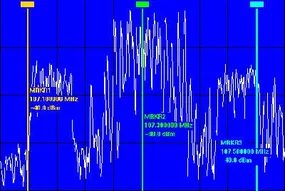
The digital signal doesn’t replace the analog one. It rides piggybacked on the same carrier wave. The transmitter sends both. A third signal can also carry text data.
This is an in-band on-channel (IBOC) system. It works because it stays on the station’s assigned frequency. It doesn’t steal bandwidth.
If it were in-band adjacent-channel (IBAC), things would break. You’d need extra space on nearby channels. That space doesn’t exist. Using it causes interference. Another station trying to broadcast there would clash with your signal. IBOC avoids the conflict. It keeps the dial clean.

The Price of Going Digital
Upgrading a station to HD Radio isn’t a plug-and-play affair. It demands serious hardware modifications. The bill? Estimates hover between $30,000 and $200,000 depending on the scope of work [Sources: Crutchfield Advisor and Wired]. There’s also the recurring cost of doing business. iBiquity owns the proprietary technology, so stations cough up an annual licensing fee of $5,000 just to keep the lights on.
It’s a steep entry fee. But the math looks different when you compare it to satellite radio—the other big player in the “better sound” arena. Satellite offers crisp audio and endless channels, but it demands a receiver and a monthly subscription. HD Radio is different. It travels over standard radio airwaves. No monthly bill. No subscription.
Where the Money Comes From
So who pays for the upgrade? The stations themselves, initially. The hope is that advertising revenue will cover the $5,000 annual fee and the heavy upfront hardware costs.
Here’s the catch. Early on, many HD2 subchannels will launch commercial-free. That’s a lure. Once listenership climbs, the commercials arrive. They’ll show up just like they do on standard analog channels. The more people tune in, the more ads sell, the easier it gets to justify the tech spend.
HD Radio Receivers
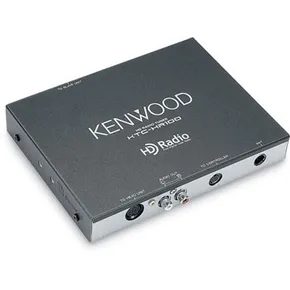
The receiver side is where the listener experience actually materializes. You need compatible hardware to decode those extra data streams. It’s not just about the broadcast; it’s about what’s sitting on your dashboard or in your living room.

The Hidden Costs and Technical Hiccups of HD Radio Adoption
The initial rollout of HD Radio faced a cold reception. At the time of writing, only about 100,000 units were in homes or cars. iBiquity aimed to quadruple that by the end of 2006. The barrier? Price. First-gen receivers cost over $1,000. Now, car stereos supporting HD Radio sit around $200. Home theater models with this feature don’t cost much more than standard high-end receivers. A Kenwood home receiver reportedly hits $100. Prices are falling.
Adoption data from October 2006 shows 609 U.S. stations broadcasting some form of HD Radio. About half were multicasting. Very few used data casting. The technology hasn’t had a smooth ride. Compression method changes plagued early versions. High costs stalled sales. The FCC’s decision to name iBiquity’s system the primary standard for digital radio in the U.S. sparked controversy. Competitors like Eureka-147, popular in Europe, use separate frequency bands instead of piggybacking digital signals onto analog ones. Attempts to open that U.S. band for such broadcasting have failed. Kahn Communications developed an AM system offering higher bandwidth without new receivers. It avoids many HD Radio AM problems.
Why HD Radio Interference Is a Regulatory Headache
Regulatory hurdles are steep. While HD Radio uses the same bandwidth as the original analog station, complaints about interference are frequent. This is particularly acute on the AM band. AM waves travel farther at night due to bending within the ionosphere. The FCC prohibits HD Radio broadcasts at night on AM stations because of this propagation. During daytime hours, adjacent stations cannot broadcast in HD. The interference is too high. Even on FM, the digital signal sometimes creates audible sound on adjacent channels. Hobbyists trying to tune in distant FM signals, known as DXing, notice this most.
The FCC’s decision to name iBiquity’s system the primary standard for digital radio in the U.S. sparked controversy among industry experts who feared a conflict of interest.
Audio Quality and Signal Switching Frustrations
Users have reported tangible issues. Audio compression sometimes causes noticeable sound quality reduction. Some stations aren’t properly processing their signal for digital transmission. Distorted sound results. Volume levels or timing of the digital signal often differ from the analog version. When receivers switch between the two, problems arise. Digital signals are difficult to tune in for many. Multicasting seriously impacts audio quality. Stations broadcasting in HD Radio often suffer a loss in quality of the analog signal. These aren’t just glitches. They affect daily listening.
HD Radio vs. Satellite Radio: The Subscription Model
The main competitor is satellite radio. It offers higher quality sound. It provides a wide range of listening options. But there’s a catch. Besides the receiver cost, satellite radio requires a monthly subscription fee. HD Radio is different. It broadcasts over radio airwaves. It is free. No monthly subscription is necessary. Many HD2 stations will be broadcast commercial-free at first. As listenership picks up, stations will insert advertising. This mirrors standard channels. Additional advertising revenues will help stations pay for HD upgrades and licensing fees.
Is HD Radio free? Yes. Broadcasters can choose to offer additional content and features for a fee. The core HD Radio technology remains free. This economic model is central to understanding why some stations hesitate to upgrade. They risk their existing analog audience without guaranteed digital revenue. The FCC’s role in standardizing this remains a point of contention. Critics argue that the people deciding on HD Radio are the same ones investing heavily in it. A conflict of interest? Perhaps. The outcome affects who gets heard. And how.