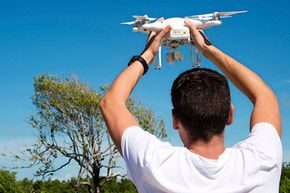
Hackers are already looking at the skies. It isn’t just about stealing credit cards from retailers or leaking government files anymore. The next frontier for cybercriminals is the air. Drones. These flying computers are vulnerable to the same exploits that cripple laptops and smartphones. Malware has evolved to infiltrate the quadcopters hovering in your local park or the heavy-lifters preparing to drop off your Amazon packages. Military-grade unmanned aerial vehicles (UAVs) aren’t safe either. They face sophisticated attacks designed to strip them of data or seize physical control.
The SkyJack Threat
Drones are essentially computers with wings. If they connect to the internet, they can be hacked. The goal? Steal the footage they collect or hijack the machine entirely.
Enter SkyJack. It looks like a standard consumer drone, but its purpose is predatory. It hunts other UAVs. Once it locks onto a target, it hacks into the system. It severs the connection between the drone and its owner. Suddenly, the drone belongs to the hunter. This creates a fleet of zombie drones, all under the control of a single attacker.
Samy Kamkar, the hacker known for the 2005 MySpace worm, released the technical specifications for SkyJack. He didn’t build it to sell; he built it to show how easy it is. The specs are public. Any technician with basic skills can build their own version. The software directs the drone to scan for nearby units. It then cuts their Wi-Fi link and takes the helm.
“Drones are essentially flying computers. As such, they’re susceptible to the same type of hacks as a laptop or smartphone.”
This isn’t theoretical. It’s documented. The technology exists. The question is only who will deploy it next.
Military GPS Spoofing
The military isn’t playing with toys. Their UAVs carry heavy payloads and sensitive intelligence. So the attacks are sharper.
In late 2011, Iran claimed it grounded a U.S. Air Force drone. The plane was flying along the border with Afghanistan. The method? GPS manipulation. Hackers jammed the communication links first. The drone lost contact with ground operators. It couldn’t send data. It couldn’t receive commands.
Then they attacked the navigation. The drone switched to autopilot. It started searching for unencrypted GPS signals. The hackers fed it false coordinates. “Spoof” data. The drone believed it was close to its home base in Afghanistan. Instead, it landed inside Iranian territory.
The breach was total. The machine didn’t crash. It surrendered itself.
The Defense Arms Race
That incident sparked an arms race. Military drone operators are scrambling to harden their fleets. Hiding the exact positions of GPS receivers is a basic step. Make the target smaller. Make it harder to lock onto.
Boeing is working with the U.S. military on a new “hacker-proof” drone. The shield isn’t just physical. It’s software-based. The onboard computers run on a new programming language. Developers claim this code is less vulnerable to standard hacks. It’s a defensive move. A reaction to the ease with which systems can be taken over.
For now, it holds. But the tools are out there. SkyJack specs are public. GPS spoofing techniques are documented. The vulnerability remains.
Frequently Answered Questions
Are drone hacks free?
Many basic drone hacking tools are free and available online. More sophisticated methods often require subscriptions or paid software.
How easy is it to hack drones?
Relatively easy. Most consumer drones use unprotected wireless communication systems. If you can get a signal, you can often get in.
The Bottom Line
The sky isn’t the final frontier for cyber warfare. It’s the new battlefield. Drones are everywhere. They collect data. They carry goods. They watch. And right now, they’re easy to trick.
The defenses are improving. Boeing’s new code helps. Hiding GPS receivers works. But hackers adapt faster than manufacturers build shields. The sky is open. And it’s being watched from the ground. By people who know how to break in.