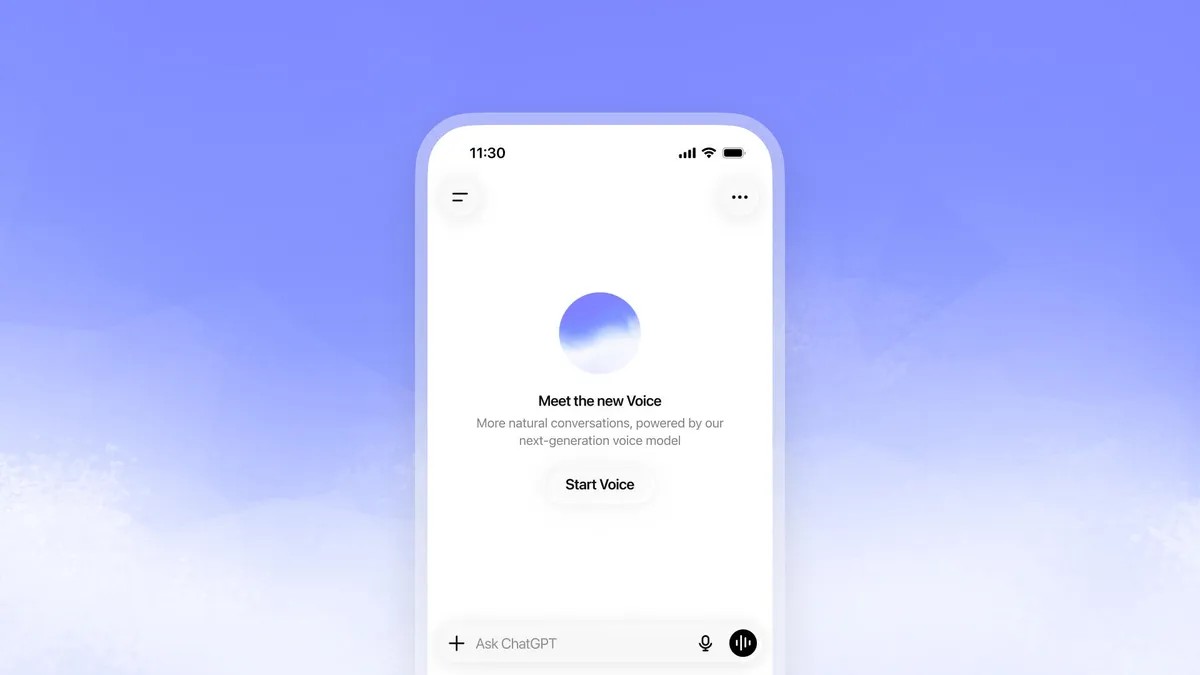
ChatGPT has always been quick. It’s good at processing text at machine speed. But there was a bottleneck. A friction point. Voice input used to follow a rigid rhythm: you spoke. The AI paused. The AI listened. The AI calculated. The AI spoke back. It was a tennis match with an uneven opponent who needed the ball to hit the wall before they could look at the next spot on the court.
Not anymore.
OpenAI has rolled out two new voice architectures: GPT-Live-1 and the lighter GPT-Live-1 mini. These are live right now for everyone. Free users included. Subscribers too. It is a fundamental shift in how the model perceives time. Or at least, how it thinks about it.
Simultaneous Listening and Speaking Architecture
The headline feature isn’t just a better voice synthesis. Although those have improved too. They are smoother, more conversational. Atty Eleti, ChatGPT’s voice product lead, told reporters the audio now mimics the cadence of human speech. You get the fillers. The “ums” and “likes” that signal thinking time rather than confusion.
The real engine under the hood is what OpenAI calls continuous interaction.
This framework dismantles the turn-based restriction. The AI now processes incoming audio data while it is generating output. It can “listen” and “talk” in the same breath. This solves the most annoying latency in digital assistants—the dead air gap between your finishing a sentence and the bot starting to respond.
“This is exactly how humans interact. We keep the conversation going while thinking in the background.” — Atty Eleti
You aren’t waiting for silence anymore. You can interrupt. The lag is minimized, not eliminated. The AI catches your new thread even while it’s finishing a clause.
Real-Time Translation Without the Pause
This architecture changes the utility case for live translation. Before, you’d have to say your entire sentence in English, hit a pause button, wait, and then hear the Spanish translation. It killed the flow of international conversation.
Now? You can speak English. ChatGPT listens as you speak. It translates and speaks the Spanish version almost instantly. The delay is shortened to the bare mechanical minimum. This applies to other languages too: Hindi, and more. The continuous interaction model handles the stream. You don’t stop and start. You just talk.
It works like this:
- Input: User speaks in source language.
- Processing: Model analyzes audio stream in real-time.
- Output: AI generates target language audio immediately.
- Loop: Continues as long as the user talks.
For travelers or anyone taking calls, this feels less like using software. It feels less clunky.
Delegating Heavy Thinking Without Losing Place
There is a hidden cost to “thinking out loud” simultaneously with talking. You lose the thread. Or your partner in conversation gets bored.
GPT-Live uses a new delegation system for these heavy lifting moments. If a user asks a complex question—something requiring deep research or multi-step reasoning—the model can offload that processing. It doesn’t stop talking. It doesn’t go silent to think for ten seconds staring into the void of its neural nets.
Kundan Kumar, research lead, explains that GPT-Live can send the hard logic tasks to stronger back-end models. Specifically, he notes it can delegate to models with higher reasoning capacities. These work in parallel. Meanwhile, the voice interface maintains the chat. It fills the gap with natural filler sounds or acknowledges you’re still listening. When the complex answer is ready, it seamlessly (yes, the marketing copy says that) weaves it into the spoken response.
“When GPT-Live has to think, it delegates… so GPT-Live remains in conversation with the user.”
The best answers aren’t always spoken aloud though. If the answer is a weather forecast, a sports score, or a chart, the model might switch modes. It displays graphics instead. Why bore the user with “the temperature is seventy-two degrees” when it can show them the cloud cover overlay? It decides the medium based on the data.
Availability, Privacy, and Control
These models are distributed now. Not coming Thursday. Not with a teaser email. They are already here. Mobile apps updated. Web interfaces refreshed.
If you don’t see the option, give it a day. Two days tops. The rollout isn’t instant globally, even if they claim it’s broad. And for the record, this release is separate from the expected GPT-5.6 drop later this week. Don’t confuse the voice layer with the base intelligence updates, though they likely share backend components.
Voice Data and Training Opt-Out
OpenAI handles the privacy side of the coin differently here. Voice mode usage automatically opts users out of training data. Your voice isn’t used to teach the next iteration.
Audio clips are kept for 30 days. This provides context for your current conversation session. If you drop the bot after ten minutes to finish another thought and pick it back up later in the night, it knows who you are. Or rather, what you were talking about. Those 30-day buffers are deletable. Users can scrub their audio history if the digital ear makes them nervous.
The assistant also now supports a dedicated listening mode. Activate it by its name. It waits. It listens. It stays in an active listening state until manually dismissed. It does not sleep on command. That distinction matters if you need to vent in private for twenty minutes and need a non-judgmental, perpetually active recipient.
Is It Actually Natural Yet?
You might notice the pauses. They aren’t as perfect as a real person’s hesitation, which is often driven by