It feels like a massive game of digital tag. You reach out. You connect. You touch everyone you can find on the internet.
MySpace and Facebook taught us this rhythm. They built empires on it. But around the mid-2000s, a new contender emerged with a different strategy. It was called Tagged.com.
For users of the big two, Tagged’s interface felt familiar. It wasn’t a reinvention. It was a remix. But the underlying mechanic was distinct.
How Tagged Changed the Social Game
Johann Schleier-Smith and Greg Tseng launched the platform in 2004. They were Harvard graduates. Their goal was specific. They wanted to dominate the 13-to-19 demographic.
But their method was different.
MySpace and Friendster were digital extensions of your real-life circle. You added classmates. You added cousins. Tagged did something else. It focused on social discovery.
The goal was not to reflect your offline life. The goal was to expand it. Rapidly.
Users could meet strangers based on shared interests. The speed mattered. The scale mattered.
In October 2006, the gates opened. The age restriction vanished.
Why did this matter?
Because the adult market was huge. By the time the demographic shift settled, the data showed a stark reality. 74 percent of users were over 21. The core base sat evenly between ages 18 and 44.
This wasn’t just a teen hangout. It was a mass-market utility.
The Numbers Behind the Popularity
The expansion worked. The site didn’t just survive the demographic shift. It thrived.
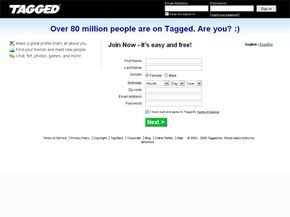
Tagged claimed 80 million registered users. That was a staggering number for the era.
Monthly page views hit 7 billion.
This volume placed Tagged firmly in the upper echelon of the industry. It became the third-largest social networking website in the United States.
It sat behind MySpace. It sat behind Facebook.
But volume attracts scrutiny.
With 80 million users comes noise. And with noise comes controversy.
The site attracted anti-spam crusaders. It drew the ire of email users who found themselves caught in Tagged’s aggressive recruiting techniques.
Before you rush to create an account, you need to understand the mechanics. You need to know how the platform operates.
Using Tagged’s Features
Access is direct. You can register for a free account immediately.
Alternatively, you might receive an invite. It comes from a friend in your contact list. They want you to see their newly uploaded photo album.
Once registered, the interface hits you with nostalgia. It resembles MySpace. Not by accident.
You create a public profile. You add a picture. You define your presence.
Then the features kick in.
You can write in your journal. It functions as a blog. You send bulletins to friends. You play games like poker. You watch videos.
There is a quirky system for collecting “pets.” These are simply other users on the site.
But the core engine is networking games.
Unlike Facebook, which restricts your network to people you know, Tagged encourages meeting strangers. The idea is simple. Grow your network. Meet as many people as possible.
How do you interact?
You send friend invitations. You do this based on profile information. You leave comments. You wink. You offer “luv.”
These actions signal interest. To anyone.
There is an economy here. You can earn virtual “gold” by completing actions. Answering a marketing survey is one way.
You use this gold to buy digital gifts. Gifts for your new friends.
If you don’t want to grind for gold, you can buy it. Directly. With a credit card.
For those who want more visibility, there is a VIP upgrade. It costs a monthly fee.
What does VIP status buy you?
A VIP logo. More gold. The ability to see who views your profile.
It is a layered system of incentives. Free access. Paid upgrades. Virtual currency. Real money.
The appeal is clear. But the controversy lingers.
The Dark Arts of Viral Growth
It’s hard to believe a social network became the poster child for digital annoyance. Time Magazine didn’t hand out the “World’s Most Annoying Website” award lightly. The culprit wasn’t just bad design. It was aggressive user acquisition. Specifically, how Tagged hooked new members.
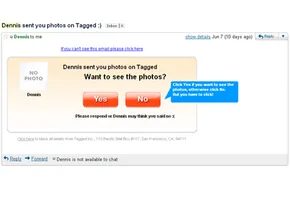
Most people stumbled onto the site via a suspicious email from a friend. The subject line? Your friend uploaded new photos. Click to see them. Ignore it? The message claimed your friend might think you rejected them. A sad face emoticon reinforced the guilt trip.
Click “Yes,” and you entered the registration funnel. Supposedly to view those photos, you provided your primary email and password. Tagged argued this was necessary to sync your contacts.
There were no photos. Not yours, not your friends’. The moment you registered, Tagged hijacked your address book. It sent the exact same “look at my photos” blast to every contact in your list. You hadn’t uploaded anything. The recipients saw an invitation to view albums that didn’t exist.
Why risk the backlash? The Terms of Service explicitly granted Tagged the right to use your personal data for commercial email initiation. They wanted you to spread the brand. Forceful harvesting of contacts did exactly that. It also upset people.
The registration process demanded more than just emails. Users were prompted to enter cell numbers for a chance at cash prizes. The friction was high. Complaints piled up.
In June 2009, founder Greg Tseng acknowledged the fire. His blog post admitted to over 2,000 complaints about the registration procedure. Tagged promised to curb the unwanted mass emailing. The damage to their reputation, however, was done.
What You Actually Get Out of It
If you can stomach the signup friction, the platform has utility. It functions as a legitimate social networking site. Millions of frequent visitors keep it alive.
The search tools are robust. Use the Search command to filter by high school or ZIP code. The results populate with registered users. Spot someone you recognize? Send a message. Connect them.
Profile keyword searches offer more granularity. Looking for photographers in your area? Enter “photographer.” Filter by age and location. You get a narrowed list. You can then initiate contact. It’s efficient for finding people with similar hobbies or topics.
Meet Me introduces randomness. Set criteria like age and location. The system queues random users for your browsing. Click “Yes” if you’re interested. Your photo moves to their Meet Me list. If they click “Yes” back, you’re friends. No games. Just mutual consent.
Chat rooms offer immediate interaction. They are divided by age and location. This makes finding like-minded users straightforward. No waiting for matches. Just jump in.
The platform isn’t just about networking. It includes entertainment. Mafia Wars and various poker games are popular draws. Users can also upload photo albums and watch videos. The Tag command allows you to send special messages to new friends. It’s a way to acknowledge the connection and invite reciprocity.
You have to navigate the spam minefield carefully. But the core community remains active. For those addicted to social networking, Tagged provides a space to find new friends.
For more information on social networking and related topics, head on over to the next page.
The Reputation Trap
Tagged didn’t just survive the early social media wars. It thrived by playing a dirty game.
Michael Arrington at TechCrunch pointed out that critics were quick to write its obituary. They called it a relic. A dead pool candidate. But the numbers told a different story. By mid-2007, Tagged had turned a profit. Fast.
“Tagged Turns Profitable — May Be Fastest Growing Social Network.”
This wasn’t luck. It was scale. The platform was growing so fast it outpaced its competitors’ ability to monetize or even understand it. Big media noticed. BusinessWeek reported that these smaller sites were fetching lofty prices. Why? Because they had the young followers the giants wanted. Money could buy hipness, or at least access to it.
The Cost of Connection
But there was a catch. The growth came with baggage.
Consumer groups flagged the Tagged.com email scam. Users received phishing attempts disguised as notifications. The BBB issued reliability warnings. Snopes had to fact-check the rumors swirling around the site. Was it safe? Was it ethical?
Sean Gregory at Time Magazine went further. He called it “The World’s Most Annoying Website.”
It wasn’t just about the emails. It was about the design. The interface pushed interaction aggressively. You didn’t just visit Tagged. You were pulled into it.
Greg Tseng, the CEO, responded. His message to users was clear: ignore the noise. Focus on the connections. But the damage to brand perception lingered.
Geographic Friction
The trouble wasn’t just in the US.
In the Middle East, Gulfbase reported that complaints forced Qtel to block the site. High ratings didn’t matter when regulators stepped in. Social networks are global. But laws are local.
This highlighted a key vulnerability for niche social networks. Popularity doesn’t equal immunity. If you attract a massive user base, you attract scrutiny. From advertisers. From regulators. From competitors.
The Data Harvest
Larry Seltzer at eWeek looked under the hood. He described the platform as “Harvesting Teenagers.”
Not physically. Digitally.
The business model relied on data. User behavior. Connections. Preferences. All of it fed the advertising engine. This raised questions about privacy. About consent. About the true cost of “free” social networking.
Daniel Nations at About.com provided a profile breakdown. But the stats didn’t show the friction. The friction between user experience and corporate strategy.
Why It Matters Now
Tagged’s story isn’t history. It’s a case study in rapid scaling.
It shows how social networking sites balance growth against reputation. The conflict is constant. Every feature adds value for some. It adds noise for others.
The sources from 2009 are old. But the dynamics are identical.
Look at today’s platforms. The same debates. The same accusations. The same race for attention.
Tagged proved you can be profitable while being annoying. It proved you can be successful while being controversial.
The question remains. Is that sustainable?
The data suggests yes. For a while. Until the next wave hits. Until the next regulation. Until the next scam.
We’re still watching.